
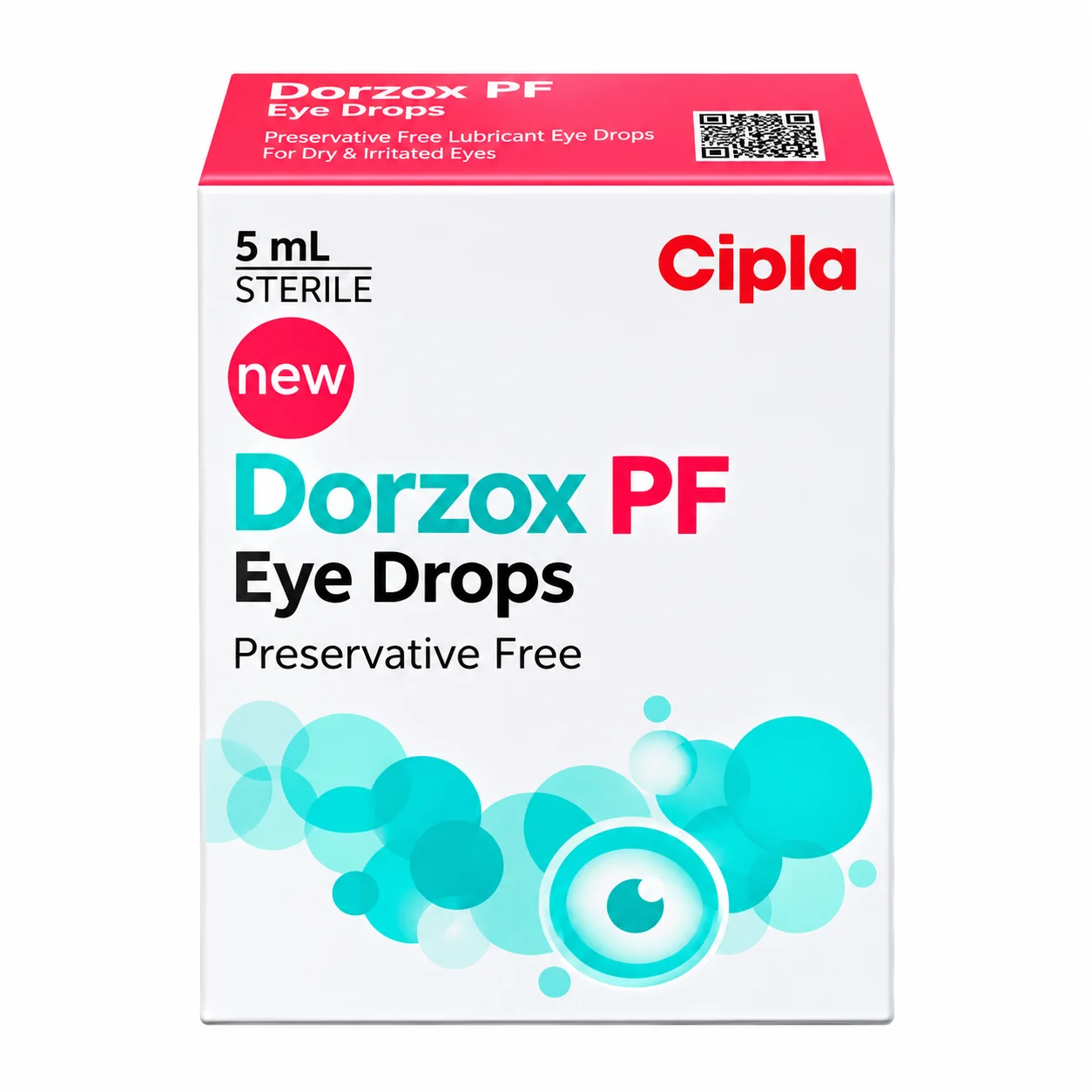
Dorzox PF Eye Drop
Want to order in bulk / B2B price?
Every order ships with a tracking number. Standard delivery takes 12–15 days.
If your parcel doesn't arrive, choose a new package or a full refund.
Call +1 251-332-4105 or email [email protected].
Share
What Are Dorzox PF Eye Drops?
Dorzox PF Eye Drops are prescription ophthalmic drops containing dorzolamide, a carbonic anhydrase inhibitor used to reduce elevated pressure inside the eye.
The abbreviation PF refers to the preservative-free formulation.
Dorzolamide is commonly prescribed for patients with ocular hypertension or certain forms of glaucoma, particularly open-angle glaucoma.
Glaucoma is a group of eye diseases characterized by progressive damage to the optic nerve. Elevated intraocular pressure is an important risk factor for glaucoma, although optic nerve damage can also occur when eye pressure is within the normal range.
The eye continuously produces a clear fluid called aqueous humor.
This fluid helps maintain the eye’s shape and provides nutrients to internal eye structures.
When aqueous humor production and drainage are not properly balanced, pressure inside the eye may increase.
Elevated intraocular pressure can damage the optic nerve over time and may contribute to irreversible vision loss.
Dorzolamide helps reduce aqueous humor production, thereby lowering intraocular pressure.
The preservative-free formulation may be useful for patients who experience sensitivity or ocular surface irritation associated with certain preservatives in conventional eye drops.
Dorzox PF may be prescribed for:
- Open-angle glaucoma
- Ocular hypertension
- Elevated intraocular pressure
- Selected glaucoma treatment regimens
- Combination therapy with other pressure-lowering eye medicines
Important: Dorzox PF lowers intraocular pressure but does not cure glaucoma or restore vision already lost from optic nerve damage. Regular eye examinations and pressure monitoring remain essential.
How Do Dorzox PF Eye Drops Work?
1. Target Carbonic Anhydrase Enzymes
Dorzolamide inhibits carbonic anhydrase, an enzyme involved in fluid production within the eye.
2. Act on the Ciliary Processes
The medicine acts primarily within the ciliary processes, which are involved in producing aqueous humor.
3. Reduce Bicarbonate Formation
Carbonic anhydrase inhibition reduces bicarbonate ion formation.
This influences the movement of sodium and fluid involved in aqueous humor secretion.
4. Decrease Aqueous Humor Production
Dorzolamide reduces the amount of aqueous humor produced inside the eye.
5. Lower Intraocular Pressure
Reduced aqueous humor production helps lower pressure within the eye.
6. Help Reduce Optic Nerve Damage Risk
Lowering elevated intraocular pressure is an established strategy for reducing the risk of glaucoma progression.
7. Provide Preservative-Free Treatment
The preservative-free formulation avoids certain preservatives used in conventional eye drops.
This may improve tolerability in selected patients, although irritation and other adverse effects can still occur.
Uses of Dorzox PF Eye Drops
1. Open-Angle Glaucoma
Dorzox PF may be prescribed to lower intraocular pressure in patients with open-angle glaucoma.
Reducing eye pressure helps lower the risk of further optic nerve damage.
2. Ocular Hypertension
The medicine may be used in patients with elevated intraocular pressure who require pressure-lowering treatment.
3. Elevated Intraocular Pressure
Dorzolamide reduces aqueous humor production and helps control elevated pressure inside the eye.
4. Long-Term Glaucoma Management
Dorzox PF may be included in long-term glaucoma treatment plans.
Patients usually require ongoing monitoring to assess treatment effectiveness.
5. Combination Glaucoma Therapy
Dorzolamide may be prescribed alongside other intraocular pressure-lowering medicines when one medicine does not provide sufficient control.
6. Preservative-Sensitive Patients
The preservative-free formulation may be considered for patients with sensitivity to certain ophthalmic preservatives.
7. Patients Requiring Multiple Eye Drops
Some patients receiving several ophthalmic medicines may benefit from reducing exposure to preservatives.
The appropriate formulation should be selected by an eye specialist.
8. Selected Specialist-Managed Glaucoma Conditions
An ophthalmologist may prescribe dorzolamide in other circumstances involving elevated intraocular pressure.
Such treatment depends on the glaucoma type and individual clinical assessment.
Important: Dorzox PF is not a treatment for ordinary eye redness, bacterial conjunctivitis, cataracts, or general eye irritation.
How to Use Dorzox PF Eye Drops
Dorzox PF should be used exactly as prescribed by an ophthalmologist.
Step-by-Step Administration Instructions
- Wash your hands thoroughly before using the eye drops.
- Check the product name, strength, and expiry date.
- Inspect the container and make sure it is intact.
- Tilt your head backward or lie down.
- Gently pull down the lower eyelid to create a small pocket.
- Hold the dropper above the eye without touching the eye, eyelid, or surrounding skin.
- Instill the prescribed number of drops.
- Close the eye gently.
- Apply gentle pressure near the inner corner of the eye for approximately one minute to reduce drainage into the tear duct.
- Avoid blinking excessively or rubbing the eye.
- Follow the container-specific instructions for closing or discarding the product.
- Wash your hands after administration if necessary.
Dosage Information
For dorzolamide 2% ophthalmic solution, a commonly recommended adult regimen is:
One drop in the affected eye or eyes three times daily when used alone.
When used with certain other glaucoma medicines, a clinician may prescribe a different regimen.
The exact dosing schedule depends on:
- Diagnosis
- Intraocular pressure
- Glaucoma severity
- Other eye medicines
- Treatment response
- Patient tolerability
- Product-specific labeling
Important: Follow the prescribing ophthalmologist’s instructions rather than changing the frequency independently.
Using Dorzox PF With Other Eye Drops
When more than one ophthalmic medicine is prescribed, separate administration by at least 5–10 minutes, or as directed by the ophthalmologist.
Eye ointments are generally applied after eye drops.
Contact Lens Precautions
Patients should follow their ophthalmologist’s instructions regarding contact lens use.
Contact lenses may need to be removed before administration, particularly if the eyes are irritated or the product leaflet instructs removal.
Preservative-Free Container Instructions
Dorzox PF packaging may differ by market.
Single-dose containers: Follow the leaflet for opening and immediate disposal after use. Do not retain leftover solution unless the manufacturer explicitly permits it.
Preservative-free multidose containers: Follow the manufacturer’s instructions for handling, closing, and the permitted period of use after opening.
Do not assume that all preservative-free eye drops have the same shelf life after opening.
Missed Dose
If a dose is missed, use it when remembered unless it is nearly time for the next scheduled dose.
If the next dose is due soon, skip the missed dose.
Do not use extra drops to compensate for a missed dose.
How Long Do Dorzox PF Eye Drops Take to Work?
Dorzolamide begins lowering intraocular pressure after ophthalmic administration.
The pressure-lowering effect generally begins within approximately two hours, with peak effects commonly occurring around two hours after administration.
The duration and magnitude of pressure reduction vary between individuals.
Patients may not feel any noticeable difference because elevated intraocular pressure often causes no symptoms.
Treatment effectiveness is assessed through eye examinations and intraocular pressure measurements.
Important: Do not discontinue Dorzox PF simply because the eyes feel normal. Glaucoma can progress without obvious symptoms.
Common Side Effects
Possible side effects include:
- Burning or stinging after application
- Eye discomfort
- Temporary blurred vision
- Eye irritation
- Bitter or unusual taste
- Redness
- Tearing
- Itching
- Dry eye symptoms
- Headache
- Mild eyelid irritation
Some symptoms may be temporary.
However, persistent or worsening irritation should be assessed by an ophthalmologist.
Serious Side Effects
Seek medical attention if you experience:
- Severe eye pain
- Significant vision changes
- Severe eye redness
- Persistent swelling around the eyes
- Signs of serious allergic reactions
- Difficulty breathing
- Severe skin reactions
- Significant corneal problems
- Severe or persistent eye inflammation
Important Serious Adverse Reactions
Sulfonamide Hypersensitivity: Dorzolamide is a sulfonamide derivative and may cause serious hypersensitivity reactions.
Corneal Effects: Patients with certain corneal conditions, particularly low endothelial cell counts, may be at increased risk of corneal edema.
Systemic Absorption: Although administered into the eye, dorzolamide can enter the bloodstream.
Acid-Base Disturbances: Systemic carbonic anhydrase inhibition may be clinically important in susceptible patients, particularly those with significant kidney impairment.
Severe Skin Reactions: Rare serious reactions associated with sulfonamide medicines may occur.
Eye Infection or Contamination: Improper handling of eye drop containers can introduce microorganisms and cause eye infections.
Contraindications & Precautions
1. Allergy to Dorzolamide
Patients with known hypersensitivity to dorzolamide or other formulation ingredients should not use the medicine.
2. Sulfonamide Hypersensitivity
Dorzolamide is chemically related to sulfonamides.
Patients with a history of serious sulfonamide reactions should inform their ophthalmologist.
3. Severe Kidney Impairment
Dorzolamide is generally not recommended in patients with severe renal impairment because the medicine and its metabolites are primarily eliminated through the kidneys.
4. Corneal Disorders
Patients with corneal endothelial dysfunction may require additional monitoring.
5. Eye Infections
Patients with an active eye infection should consult their ophthalmologist before continuing or changing treatment.
6. Eye Surgery
Patients who have recently undergone eye surgery should follow their ophthalmologist’s instructions.
7. Eye Injury
Eye injuries require medical evaluation.
8. Pregnancy
Use during pregnancy requires individualized medical assessment of potential benefits and risks.
9. Breastfeeding
It is not well established whether ophthalmic dorzolamide passes into human breast milk in clinically significant amounts.
A healthcare professional should assess treatment suitability.
10. Children
Pediatric use should follow specialist recommendations and product-specific prescribing information.
11. Older Adults
Older patients may require additional assessment of kidney function, ocular surface health, and concurrent medicines.
12. Contact Lens Use
Follow the product leaflet and ophthalmologist’s recommendations regarding contact lenses.
13. Other Glaucoma Medicines
Patients using multiple glaucoma medicines should follow the prescribed administration schedule.
14. Oral Carbonic Anhydrase Inhibitors
Combining topical dorzolamide with oral carbonic anhydrase inhibitors may increase systemic effects.
Such combinations are generally not recommended without specialist direction.
15. Medication Interactions
Potentially relevant medicines include:
- Acetazolamide
- Methazolamide
- Other carbonic anhydrase inhibitors
- High-dose salicylates
- Other ophthalmic pressure-lowering medicines
Patients should inform their healthcare professional about all prescription, non-prescription, and herbal medicines.
16. Eye Drop Contamination
Do not allow the dropper tip to touch the eye, fingers, or surrounding surfaces.
17. Driving and Machinery
Temporary blurred vision may occur after administration.
Avoid driving until vision is clear.
18. Medical Monitoring
Healthcare professionals may monitor:
- Intraocular pressure
- Optic nerve health
- Visual fields
- Corneal condition
- Eye irritation
- Treatment adherence
- Response to therapy
- Kidney function when clinically indicated
- Other ophthalmic medicines
- Signs of disease progression
Advantages
- Contains dorzolamide, a carbonic anhydrase inhibitor.
- Helps reduce elevated intraocular pressure.
- Used in open-angle glaucoma.
- Used in ocular hypertension.
- Reduces aqueous humor production.
- May help reduce the risk of glaucoma progression through pressure control.
- Available in preservative-free formulation.
- May be suitable for selected preservative-sensitive patients.
- Can be used with other glaucoma medicines when prescribed.
- Administered directly into the eye.
- Provides a non-surgical pressure-lowering treatment option.
- Can be included in long-term glaucoma management plans.
- May help reduce exposure to certain ophthalmic preservatives.
Disadvantages / Limitations
- Requires a prescription.
- May cause burning or stinging.
- May cause temporary blurred vision.
- May cause eye irritation.
- May cause a bitter taste.
- Requires consistent administration.
- Does not permanently cure glaucoma.
- Does not restore vision already lost from glaucoma.
- May cause allergic reactions.
- May not be suitable for patients with severe kidney impairment.
- May cause corneal complications in susceptible patients.
- Requires regular eye pressure monitoring.
- May require combination therapy.
- Preservative-free packaging requires careful handling.
- Improper handling may contaminate the solution.
- Not suitable for treating ordinary eye infections or redness.
Important Notes
Brand Name: Dorzox PF.
Generic Name: Dorzolamide.
Active Ingredient: Dorzolamide Hydrochloride.
Common Strength: Equivalent to Dorzolamide 2% w/v; verify packaging.
Dosage Form: Sterile Ophthalmic Solution.
Formulation: Preservative-Free.
Drug Class: Carbonic Anhydrase Inhibitor.
Therapeutic Category: Anti-Glaucoma Medicine.
Primary Uses: Open-angle glaucoma and ocular hypertension.
Mechanism of Action: Inhibition of carbonic anhydrase, reducing aqueous humor production.
Administration Route: Ophthalmic only.
Dosage: As prescribed by an ophthalmologist.
Eye Pressure Monitoring: Regular intraocular pressure measurements are necessary.
Kidney Precaution: Generally not recommended in severe renal impairment.
Allergy Precaution: Dorzolamide is a sulfonamide derivative.
Corneal Precaution: Use carefully in patients with certain corneal disorders.
Container Precaution: Avoid contaminating the dropper tip.
Preservative-Free Precaution: Follow product-specific handling and disposal instructions.
Storage: Follow manufacturer labeling.
Frequently Asked Questions
1. What are Dorzox PF Eye Drops used for?
Dorzox PF Eye Drops are used to reduce elevated intraocular pressure in patients with ocular hypertension or open-angle glaucoma.
2. What is the active ingredient in Dorzox PF?
The active ingredient is dorzolamide hydrochloride.
3. What does PF mean in Dorzox PF?
PF stands for preservative-free.
4. Is Dorzox PF used for glaucoma?
Yes. Dorzolamide is used to lower intraocular pressure in patients with open-angle glaucoma.
5. Can Dorzox PF treat ocular hypertension?
Yes. Dorzolamide may be prescribed to reduce elevated intraocular pressure in patients with ocular hypertension.
6. How does Dorzox PF work?
It inhibits carbonic anhydrase in the eye, reducing aqueous humor production and lowering intraocular pressure.
7. How should Dorzox PF Eye Drops be used?
Instill the prescribed number of drops into the affected eye or eyes according to the ophthalmologist’s instructions.
8. How often should Dorzox PF be used?
Dorzolamide 2% is commonly administered three times daily when used alone, although the prescribed schedule may differ.
9. Can Dorzox PF cause burning or stinging?
Yes. Temporary burning or stinging may occur after application.
10. Can Dorzox PF cause blurred vision?
Yes. Temporary blurred vision may occur after instillation.
| Product Details | Information |
|---|---|
| Product Name | Dorzox PF Eye Drops |
| Brand Name | Dorzox PF |
| Generic Name | Dorzolamide |
| Active Ingredient | Dorzolamide Hydrochloride |
| Common Strength | Equivalent to Dorzolamide 2% w/v (20 mg/mL); verify packaging |
| Dosage Form | Sterile Ophthalmic Solution |
| Formulation | Preservative-Free |
| Route of Administration | Ophthalmic (Eye Use Only) |
| Manufacturer | Verify current product packaging |
| Therapeutic Category | Anti-Glaucoma Medicines / Ophthalmic Medicines |
| Drug Class | Carbonic Anhydrase Inhibitor |
| Primary Uses | Reduction of elevated intraocular pressure in patients with ocular hypertension or open-angle glaucoma |
| Pack Size | Varies by market and packaging |
| Prescription Status | Prescription-Only Medicine |
| Storage | Store according to the product label and follow instructions for preservative-free packaging |
| Pack sizes | 1 eye drop, 3 eye drops, 6 eye drops |
Related products
-
 $22.00 – $125.00Price range: $22.00 through $125.00 Choose Pack This product has multiple variants. The options may be chosen on the product page
-
 $21.00 – $56.00Price range: $21.00 through $56.00 Choose Pack This product has multiple variants. The options may be chosen on the product page
-
 $7.00 – $29.00Price range: $7.00 through $29.00 Choose Pack This product has multiple variants. The options may be chosen on the product page
-
 $41.40 – $122.22Price range: $41.40 through $122.22 Choose Pack This product has multiple variants. The options may be chosen on the product page
Reviews
There are no reviews yet.