






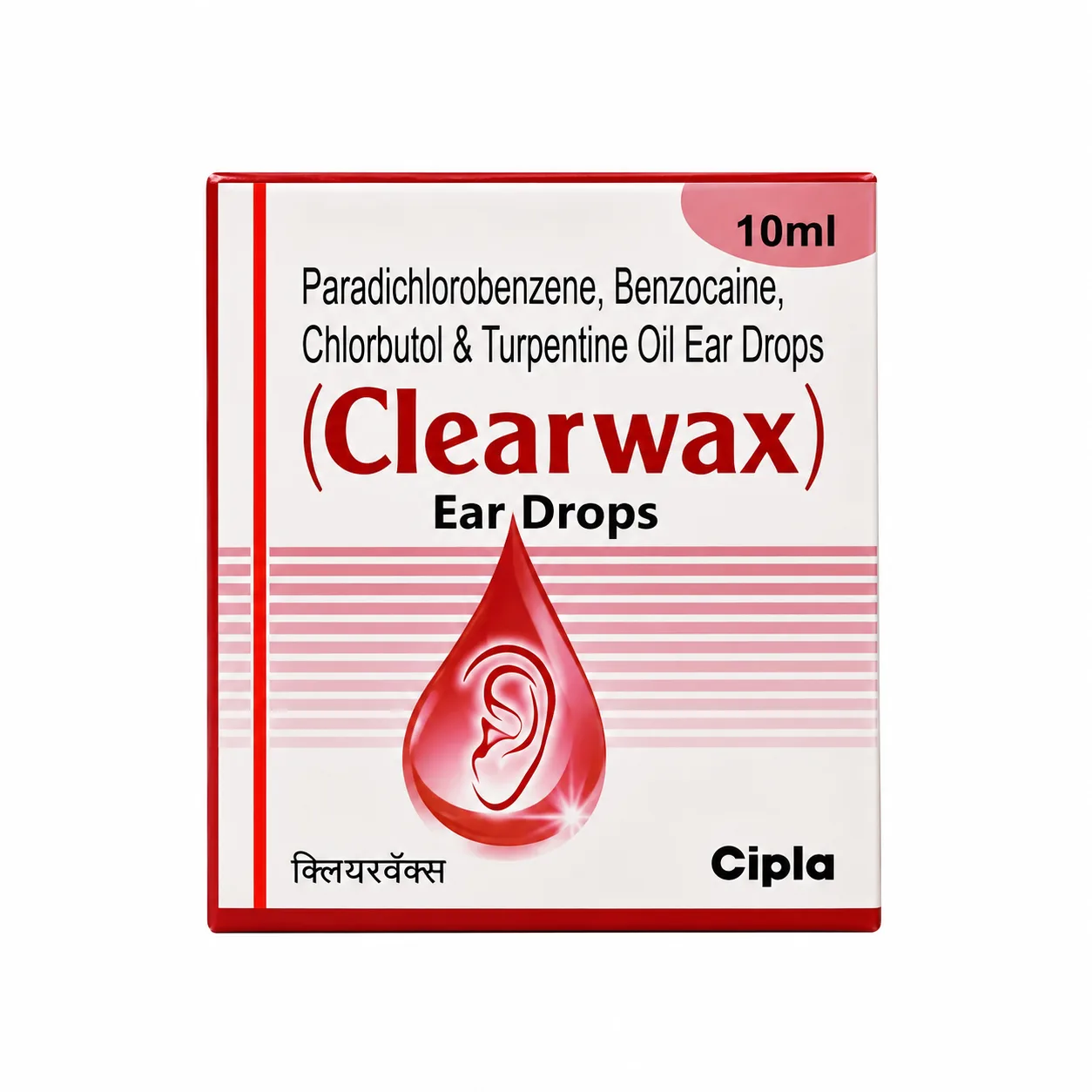
Clearwax Ear Drop
Want to order in bulk / B2B price?
Every order ships with a tracking number. Standard delivery takes 12–15 days.
If your parcel doesn't arrive, choose a new package or a full refund.
Call +1 251-332-4105 or email [email protected].
Share
What Are Clearwax Ear Drops?
Clearwax Ear Drops are a combination ear-care medicine used to help soften and loosen accumulated earwax (cerumen) in the external ear canal.
Earwax naturally protects the ear by trapping dust, dirt, and other particles. However, excessive or hardened earwax can cause discomfort, a blocked-ear sensation, itching, and temporary hearing difficulties.
Clearwax Ear Drops help soften impacted earwax, making it easier to remove naturally or through a healthcare professional’s ear-cleaning procedure.
The formulation also contains an ingredient that provides temporary local pain relief.
How Do Clearwax Ear Drops Work?
Clearwax combines ingredients with complementary actions:
- Paradichlorobenzene: Helps soften and loosen hardened earwax, making removal easier.
- Benzocaine: A local anesthetic that temporarily reduces discomfort by blocking nerve signals.
- Chlorbutol: Has preservative and mild local anesthetic properties.
- Turpentine Oil: Helps soften accumulated wax and supports the cerumen-removal process.
Together, these ingredients help reduce earwax buildup and associated discomfort.
How to Use Clearwax Ear Drops
- Wash your hands before applying the drops.
- Hold the bottle in your hands briefly to bring it closer to body temperature.
- Tilt your head sideways with the affected ear facing upward.
- Instill the prescribed number of drops into the ear canal.
- Keep your head tilted for a few minutes to allow the drops to reach the wax.
- Wipe away excess liquid from the outer ear using a clean tissue.
- Avoid inserting cotton swabs or other objects deep into the ear canal.
- Follow the dosage and treatment duration recommended by your healthcare professional.
Important: Do not use these drops if you have a suspected perforated eardrum, ear discharge, or significant ear pain unless an ENT specialist has confirmed that they are appropriate.
Common Side Effects
Possible side effects include:
- Mild ear irritation
- Temporary burning or stinging
- Itching inside the ear
- Local discomfort
- Redness around the ear canal
- Temporary sensation of fullness
- Skin sensitivity
These effects may be mild and temporary. Discontinue use and seek medical advice if irritation persists or worsens.
Serious Side Effects
Seek medical attention if you experience:
- Severe ear pain
- Persistent dizziness
- Sudden hearing loss
- Significant swelling
- Severe allergic reactions
- Bleeding or discharge from the ear
- Severe burning or irritation
Benzocaine can rarely cause methemoglobinemia, a serious condition affecting the blood’s ability to carry oxygen. Seek emergency care for symptoms such as blue or gray skin or lips, shortness of breath, unusual fatigue, or rapid heartbeat.
Contraindications & Precautions
Before using Clearwax Ear Drops, inform your healthcare professional if you:
- Are allergic to benzocaine or other ingredients in the formulation.
- Have a perforated or damaged eardrum.
- Have an active ear infection.
- Experience ear discharge or bleeding.
- Have recently undergone ear surgery.
- Have ear tubes or other ear-related medical devices.
- Experience severe ear pain or unexplained hearing loss.
- Are pregnant or breastfeeding.
- Plan to use the product for a child.
Avoid self-treatment if the cause of ear symptoms is uncertain. Earwax blockage, infections, and eardrum injuries can produce similar symptoms but require different treatments.
Advantages
- Helps soften hardened earwax.
- Supports easier removal of accumulated cerumen.
- May relieve discomfort associated with wax buildup.
- Contains a local anesthetic ingredient.
- Convenient ear-drop formulation.
- Provides localized treatment within the external ear canal.
- May help prepare impacted wax for professional removal.
- Does not contain a corticosteroid.
Disadvantages / Limitations
- May cause irritation or burning.
- Not suitable for patients with a perforated eardrum.
- Does not treat all causes of ear pain or hearing loss.
- May not completely remove severely impacted earwax.
- Can cause allergic reactions in sensitive individuals.
- Should not be used continuously without medical guidance.
- Does not replace professional earwax removal when required.
- Should not be used for ear infections unless specifically advised by a healthcare professional.
Important Notes
Clearwax Ear Drops are intended for external ear canal use only.
Do not use them in the eyes, nose, or mouth.
Avoid using sharp objects, cotton buds, or other instruments to remove earwax, as these can push wax deeper into the ear canal or damage the eardrum.
If ear blockage persists after treatment, consult an ENT specialist for examination and appropriate wax removal.
Store according to the manufacturer’s instructions and keep the bottle tightly closed.
Frequently Asked Questions
What are Clearwax Ear Drops used for?
Clearwax Ear Drops are used to soften and loosen accumulated earwax, helping make removal easier.
How do Clearwax Ear Drops remove earwax?
They contain wax-softening ingredients that help loosen hardened cerumen inside the ear canal.
Do Clearwax Ear Drops contain an antibiotic?
No. The listed formulation does not contain an antibiotic.
Are Clearwax Ear Drops a steroid?
No. Clearwax is an earwax-softening combination and does not contain a corticosteroid.
Can Clearwax Ear Drops improve hearing?
They may help improve hearing when reduced hearing is caused by earwax blockage. They will not treat hearing loss caused by other conditions.
Can Clearwax Ear Drops treat an ear infection?
No. Clearwax is intended for earwax management and should not replace treatment for bacterial or fungal ear infections.
Can I use Clearwax Ear Drops every day?
Use them only for the recommended treatment duration. Continuous use without medical advice is not recommended.
Can Clearwax Ear Drops cause burning?
Yes. Some users may experience temporary burning, stinging, or irritation.
Can children use Clearwax Ear Drops?
Use in children should be guided by a pediatrician or ENT specialist, particularly because the formulation contains benzocaine.
Can I use Clearwax Ear Drops if my eardrum is perforated?
No. Avoid using these drops with a suspected or confirmed perforated eardrum unless an ENT specialist specifically recommends them.
What should I do if earwax does not come out?
Consult a healthcare professional. Impacted earwax may require removal using appropriate clinical techniques.
| Product Name | Clearwax Ear Drops |
|---|---|
| Brand Name | Clearwax |
| Active Ingredients | Benzocaine, Chlorbutol, Paradichlorobenzene and Turpentine Oil |
| Strength | Verify individual ingredient concentrations on the packaging |
| Dosage Form | Ear Drops / Otic Solution |
| Route of Administration | Otic (Ear Use Only) |
| Pack Size | Verify from product packaging |
| Therapeutic Class | Cerumenolytic / Earwax Softener |
| Category | Ear Care / Earwax Removal |
| Prescription Status | Follow local regulations and product labeling |
| Pack sizes | 1 bottle, 3 bottles, 6 bottles |
Related products
-
 $12.00 – $69.00Price range: $12.00 through $69.00 Choose Pack This product has multiple variants. The options may be chosen on the product page
-
 $14.00 – $40.20Price range: $14.00 through $40.20 Choose Pack This product has multiple variants. The options may be chosen on the product page
-
 $3.00 – $15.00Price range: $3.00 through $15.00 Choose Pack This product has multiple variants. The options may be chosen on the product page
-
 $11.00 – $48.00Price range: $11.00 through $48.00 Choose Pack This product has multiple variants. The options may be chosen on the product page
Reviews
There are no reviews yet.