





























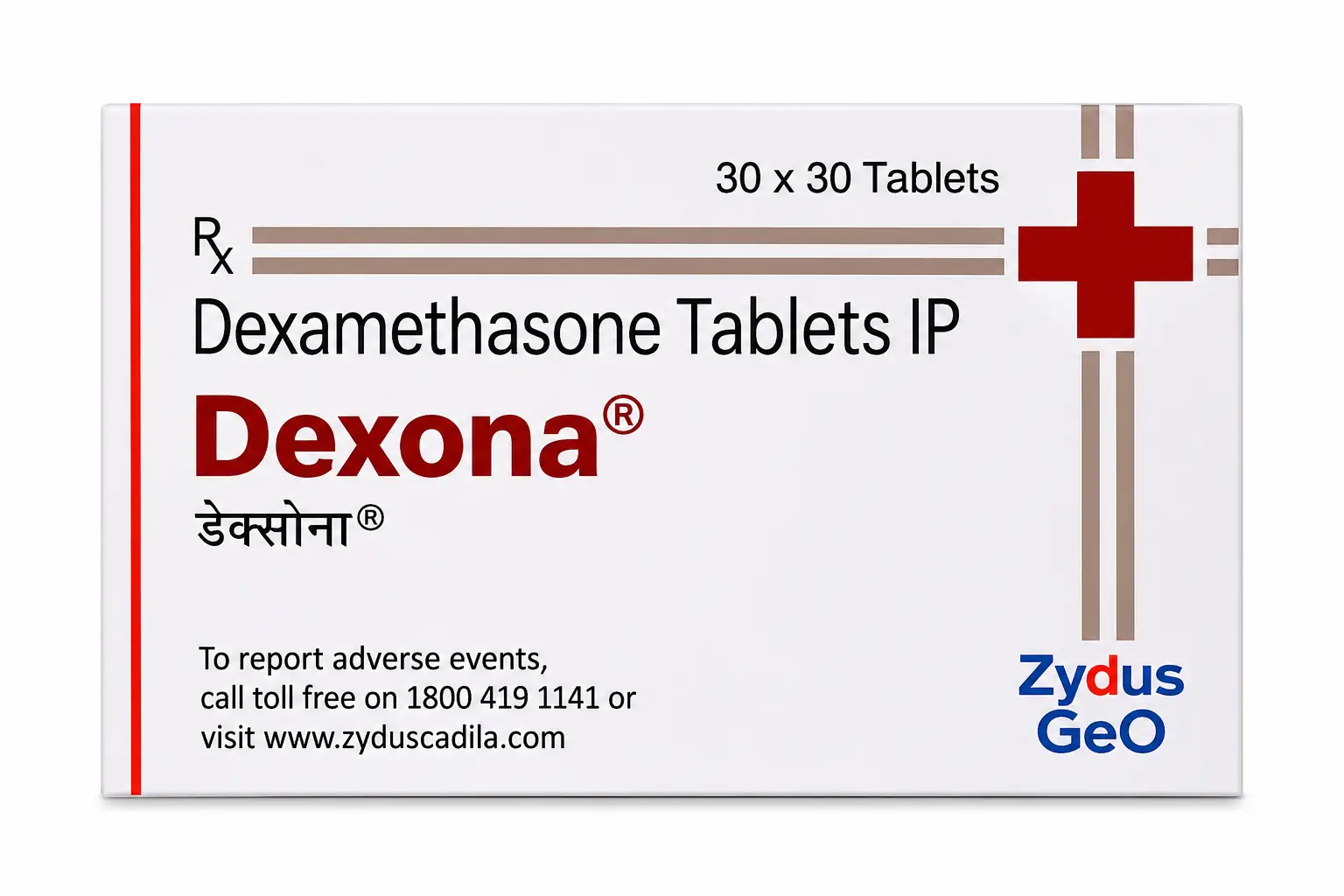
Dexona (Dexamethasone)
Want to order in bulk / B2B price?
Every order ships with a tracking number. Standard delivery takes 12–15 days.
If your parcel doesn't arrive, choose a new package or a full refund.
Call +1 251-332-4105 or email [email protected].
Share
What Is Dexona (Dexamethasone)?
Dexona (Dexamethasone) is a prescription corticosteroid medicine used to reduce inflammation and suppress excessive immune system activity.
Dexamethasone belongs to a group of medicines called glucocorticoids.
Glucocorticoids are synthetic medicines that act similarly to cortisol, a hormone naturally produced by the adrenal glands.
Cortisol plays an important role in metabolism, stress responses, inflammation, and immune system regulation.
In certain medical conditions, excessive inflammation or abnormal immune responses can damage tissues and cause symptoms such as swelling, redness, pain, and irritation.
Dexamethasone helps control these responses by altering the activity of genes involved in inflammation and immune function.
It may be prescribed for conditions involving:
- Severe allergic reactions
- Inflammatory disorders
- Autoimmune diseases
- Certain respiratory conditions
- Selected skin disorders
- Rheumatic diseases
- Cerebral edema
- Certain blood disorders
- Selected cancer-related complications
- Other corticosteroid-responsive medical conditions
Dexamethasone is a potent, long-acting corticosteroid.
Its anti-inflammatory activity is considerably stronger than that of hydrocortisone on a milligram-for-milligram basis.
Important: Dexona is not an ordinary painkiller or antibiotic. It should not be used without medical supervision because corticosteroids can cause serious adverse effects, particularly with high doses or prolonged treatment.
How Does Dexona (Dexamethasone) Work?
1. Binds to Glucocorticoid Receptors
Dexamethasone enters cells and binds to intracellular glucocorticoid receptors.
This interaction influences the expression of genes involved in inflammation and immune responses.
2. Reduces Inflammatory Mediators
Dexamethasone reduces the production and activity of several inflammatory mediators.
These include certain cytokines and other substances involved in inflammation.
3. Suppresses Excessive Immune Activity
Dexamethasone reduces the activity of selected immune cells and immune signaling pathways.
This can be beneficial in conditions involving excessive or abnormal immune responses.
4. Helps Reduce Swelling
By reducing inflammation and vascular permeability, dexamethasone may help decrease tissue swelling.
5. Controls Allergic Inflammation
Dexamethasone may reduce inflammation associated with certain severe allergic conditions.
However, it is not a substitute for epinephrine in the emergency treatment of anaphylaxis.
6. Helps Manage Autoimmune Inflammation
In selected autoimmune diseases, dexamethasone can suppress immune-mediated inflammation and tissue damage.
7. Provides Long-Acting Corticosteroid Effects
Dexamethasone has a relatively long biological duration of action.
This allows sustained anti-inflammatory and immunosuppressive activity, although the appropriate dosing schedule depends on the condition.
Uses of Dexona (Dexamethasone)
1. Severe Allergic Conditions
Dexamethasone may be prescribed for selected severe allergic conditions when systemic corticosteroid treatment is appropriate.
It helps reduce inflammation associated with the allergic response.
2. Autoimmune Disorders
Dexamethasone may be used to manage certain autoimmune conditions characterized by excessive immune activity.
3. Rheumatic Diseases
It may be prescribed for selected inflammatory rheumatic conditions, including certain cases of rheumatoid arthritis and other systemic inflammatory disorders.
4. Respiratory Inflammatory Conditions
Dexamethasone may be used in selected respiratory conditions, such as certain asthma exacerbations or other inflammatory airway disorders.
It is not a routine substitute for maintenance inhaled therapy.
5. Cerebral Edema
Dexamethasone may be used to reduce certain types of brain swelling, particularly edema associated with brain tumors.
Its use depends on the cause of the swelling.
6. Skin and Dermatological Disorders
Dexamethasone may be prescribed for severe corticosteroid-responsive inflammatory skin conditions.
7. Certain Cancer-Related Conditions
Dexamethasone may be included in oncology treatment protocols.
It may be used to manage selected cancer-related symptoms, prevent chemotherapy-associated nausea, or as part of treatment for certain hematological cancers.
8. Selected Severe Inflammatory Conditions
Dexamethasone may be used in other conditions where systemic corticosteroid therapy is clinically indicated.
For example, it has an established role in treating certain hospitalized patients with COVID-19 who require supplemental oxygen or respiratory support.
Important: Dexamethasone is not recommended for routine treatment of mild COVID-19 in patients who do not require supplemental oxygen, unless another medical indication exists.
How to Take Dexona Tablets
Dexona should be taken exactly as prescribed by a qualified healthcare professional.
Step-by-Step Administration Instructions
- Confirm the prescribed tablet strength.
- Read the prescription and product information leaflet.
- Take the medicine orally with water.
- Follow the prescribed dosing schedule.
- Taking the tablet with food may help reduce stomach discomfort.
- Do not increase or reduce the dose independently.
- Do not use Dexona for longer than prescribed.
- Do not stop prolonged corticosteroid treatment suddenly.
- Inform the prescriber about infections and other medicines.
- Attend follow-up appointments when ongoing treatment is required.
Dosage Information
Dexamethasone dosing varies widely according to the condition being treated.
The appropriate dose depends on:
- Diagnosis
- Severity of inflammation
- Patient age
- Body weight when relevant
- Treatment duration
- Response to therapy
- Other medical conditions
- Concurrent medicines
- Risk of adverse effects
Some conditions require short courses of treatment, while others require carefully monitored longer-term therapy.
Important: No single standard dose is appropriate for all Dexona users. A 0.5 mg tablet strength does not mean every patient should take 0.5 mg daily.
When Should Dexona Be Taken?
For once-daily corticosteroid regimens, morning administration is commonly preferred.
However, certain conditions require different dosing schedules.
Follow the specific prescription.
Can Dexona Be Stopped Suddenly?
Patients who have received prolonged systemic corticosteroid therapy may develop suppression of the hypothalamic-pituitary-adrenal axis.
Stopping treatment abruptly can cause adrenal insufficiency.
Symptoms may include:
- Severe fatigue
- Weakness
- Dizziness
- Nausea
- Low blood pressure
- General illness
A healthcare professional may recommend gradually reducing the dose when appropriate.
Short courses do not always require tapering, but this decision depends on the dose, duration, and clinical circumstances.
Missed Dose
If a dose is missed, follow the product leaflet or prescribing clinician’s instructions.
Do not take a double dose unless specifically instructed.
How Long Does Dexona Take to Work?
Dexamethasone begins exerting pharmacological effects after absorption.
Some anti-inflammatory benefits may become noticeable within hours, while clinical improvement may take longer depending on the condition.
The response depends on:
- Underlying diagnosis
- Severity of inflammation
- Prescribed dose
- Route of administration
- Treatment duration
- Individual response
The time needed to achieve symptom control varies considerably between conditions.
Common Side Effects
Possible side effects include:
- Increased appetite
- Weight gain
- Indigestion
- Stomach discomfort
- Difficulty sleeping
- Mood changes
- Irritability
- Increased blood glucose
- Fluid retention
- Increased sweating
- Acne
- Headache
- Increased susceptibility to infections
Side effects are generally more likely with higher doses or prolonged treatment.
Serious Side Effects
Seek medical attention if you experience:
- Severe infection symptoms
- Significant changes in vision
- Severe mood or behavioral changes
- Black or bloody stools
- Vomiting blood
- Severe muscle weakness
- Severe swelling
- Uncontrolled high blood glucose
- Severe allergic reactions
- Symptoms of adrenal insufficiency
Important Serious Adverse Reactions
Adrenal Suppression: Prolonged corticosteroid treatment can suppress natural cortisol production.
Serious Infections: Dexamethasone may increase susceptibility to infections and mask typical infection symptoms.
Hyperglycemia: Blood glucose may rise significantly, especially in patients with diabetes.
Osteoporosis: Long-term treatment may weaken bones and increase fracture risk.
Psychiatric Effects: Corticosteroids can cause severe mood changes, mania, depression, or psychosis.
Gastrointestinal Complications: Corticosteroids may contribute to gastrointestinal complications, particularly when combined with NSAIDs.
Eye Complications: Prolonged use may increase the risk of cataracts and glaucoma.
Cushingoid Changes: Long-term exposure may cause characteristic changes in body fat distribution, skin, and metabolism.
Contraindications & Precautions
1. Allergy to Dexamethasone
Do not use in patients with known hypersensitivity to dexamethasone or other formulation ingredients.
2. Systemic Fungal Infections
Systemic corticosteroids are generally contraindicated in patients with systemic fungal infections unless specific specialist circumstances apply.
3. Active Infections
Dexamethasone may worsen infections or mask their symptoms.
4. Tuberculosis
Patients with active or latent tuberculosis require careful assessment because immunosuppression may increase the risk of disease activation or worsening.
5. Diabetes
Dexamethasone may increase blood glucose and require adjustments to diabetes management.
6. High Blood Pressure
Corticosteroids may worsen hypertension in susceptible patients.
7. Heart Failure
Fluid retention and other corticosteroid effects may worsen certain cardiovascular conditions.
8. Osteoporosis
Long-term corticosteroid therapy may increase bone loss and fracture risk.
9. Peptic Ulcer Disease
Patients with a history of gastrointestinal ulcers or bleeding require careful assessment.
10. Glaucoma and Cataracts
Prolonged corticosteroid exposure may increase intraocular pressure and the risk of cataracts.
11. Psychiatric Disorders
Dexamethasone may cause mood changes, agitation, insomnia, mania, or psychotic symptoms.
12. Adrenal Suppression
Long-term treatment may suppress natural cortisol production.
Dose reduction and discontinuation should be managed appropriately.
13. Pregnancy
Dexamethasone use during pregnancy requires individualized medical assessment.
Potential benefits and risks depend on the indication, dose, and treatment duration.
14. Breastfeeding
Dexamethasone may pass into breast milk.
A healthcare professional should assess the risks and benefits of treatment.
15. Children and Adolescents
Long-term corticosteroid use may affect growth and development.
Pediatric treatment requires careful supervision.
16. Vaccination
Live vaccines may be unsuitable during treatment with immunosuppressive corticosteroid doses.
Patients should discuss vaccination plans with their healthcare professional.
17. Medication Interactions
Potentially relevant medicines include:
- Ibuprofen
- Diclofenac
- Aspirin
- Warfarin
- Insulin
- Other diabetes medicines
- Rifampin
- Carbamazepine
- Phenytoin
- Ketoconazole
- Clarithromycin
- Ritonavir
- Certain diuretics
- Other immunosuppressants
- Live vaccines
Some interactions may increase corticosteroid exposure, reduce its effectiveness, or increase adverse-effect risks.
18. Medical Monitoring
Healthcare professionals may monitor:
- Blood glucose
- Blood pressure
- Body weight
- Infection symptoms
- Electrolytes when indicated
- Bone health
- Eye health
- Mood and sleep
- Signs of adrenal suppression
- Treatment response
- Medication interactions
- Growth in children receiving prolonged treatment
Advantages
- Contains dexamethasone, a potent glucocorticoid.
- Provides anti-inflammatory activity.
- Suppresses excessive immune responses.
- May reduce swelling and inflammatory symptoms.
- Used for selected severe allergic conditions.
- May help manage autoimmune inflammation.
- Used in certain rheumatic diseases.
- Has established applications in oncology.
- May be used for selected cases of cerebral edema.
- Available in oral tablet formulations.
- Has a relatively long biological duration of action.
- Can be incorporated into specialist treatment protocols.
- Offers flexible dosing based on clinical requirements.
Disadvantages / Limitations
- Requires a prescription.
- May increase infection risk.
- May increase blood glucose.
- May cause insomnia.
- May cause mood changes.
- May increase appetite and weight.
- May cause fluid retention.
- May suppress adrenal function.
- May weaken bones during long-term treatment.
- May increase the risk of cataracts and glaucoma.
- May cause muscle weakness.
- May cause skin thinning.
- May worsen certain infections.
- May interact with numerous medicines.
- Requires careful dose selection.
- May require gradual withdrawal after prolonged use.
- Does not cure the underlying cause of every inflammatory or autoimmune condition.
- Not suitable for unsupervised long-term use.
Important Notes
Brand Name: Dexona.
Generic Name: Dexamethasone.
Active Ingredient: Dexamethasone.
Strength: Confirm from packaging; commonly available as 0.5 mg tablets.
Dosage Form: Oral Tablet for this listing.
Drug Class: Glucocorticoid Corticosteroid.
Therapeutic Category: Anti-inflammatory / Immunosuppressant.
Primary Uses: Selected inflammatory, allergic, and autoimmune conditions.
Mechanism of Action: Glucocorticoid receptor activation and regulation of inflammatory gene expression.
Administration Route: Oral.
Dosage: Individualized according to the medical indication.
Infection Precaution: May suppress immune responses and mask infection symptoms.
Blood Glucose Precaution: May cause hyperglycemia.
Bone Health Precaution: Long-term treatment may increase osteoporosis risk.
Adrenal Warning: Prolonged treatment may require gradual withdrawal.
Psychiatric Precaution: May cause mood and behavioral changes.
Pregnancy Precaution: Use only after medical assessment.
Storage: Follow product packaging instructions.
Frequently Asked Questions
1. What is Dexona used for?
Dexona contains dexamethasone, a corticosteroid used to manage selected inflammatory, allergic, autoimmune, and other medical conditions.
2. What is the active ingredient in Dexona?
The active ingredient is dexamethasone.
3. Is Dexona a steroid medicine?
Yes. Dexona contains dexamethasone, a glucocorticoid corticosteroid.
4. Is Dexona an antibiotic?
No. Dexona is a corticosteroid and does not directly kill bacteria.
5. How does Dexona work?
It activates glucocorticoid receptors and reduces the activity of inflammatory and immune signaling pathways.
6. Can Dexona treat allergic conditions?
Yes. It may be prescribed for selected severe allergic conditions when systemic corticosteroid treatment is appropriate.
7. Can Dexona reduce swelling?
Yes. Dexamethasone can reduce swelling caused by certain inflammatory conditions.
| Product Details | Information |
|---|---|
| Product Name | Dexona |
| Brand Name | Dexona |
| Generic Name | Dexamethasone |
| Active Ingredient | Dexamethasone |
| Strength | Varies by formulation; Dexona 0.5 mg tablets are a commonly available presentation |
| Dosage Form | Oral Tablets; other dexamethasone formulations are available separately |
| Route of Administration | Oral for tablets |
| Manufacturer | Zydus Healthcare Limited; verify current product packaging |
| Therapeutic Category | Corticosteroids / Anti-inflammatory Medicines |
| Drug Class | Glucocorticoid Corticosteroid |
| Primary Uses | Inflammatory, allergic, autoimmune, and selected other medical conditions |
| Additional Uses | Cerebral edema, certain cancer-related conditions, and other specialist-directed treatments |
| Pack Size | Varies by manufacturer and market |
| Prescription Status | Prescription-Only Medicine |
| Storage | Store according to the product packaging, protected from excessive heat and moisture |
| Pack sizes | 90 tablets, 120 tablets, 150 tablets, 300 tablets |
Related products
-
 Rated 4.53 out of 5$40.00 – $180.00Price range: $40.00 through $180.00 Choose Pack This product has multiple variants. The options may be chosen on the product page
-
 Rated 4.57 out of 5$150.00 – $414.00Price range: $150.00 through $414.00 Choose Pack This product has multiple variants. The options may be chosen on the product page
-
 Rated 4.30 out of 5$150.00 – $414.00Price range: $150.00 through $414.00 Choose Pack This product has multiple variants. The options may be chosen on the product page
-
 Rated 4.60 out of 5$150.00 – $300.00Price range: $150.00 through $300.00 Choose Pack This product has multiple variants. The options may be chosen on the product page
Reviews
There are no reviews yet.