





































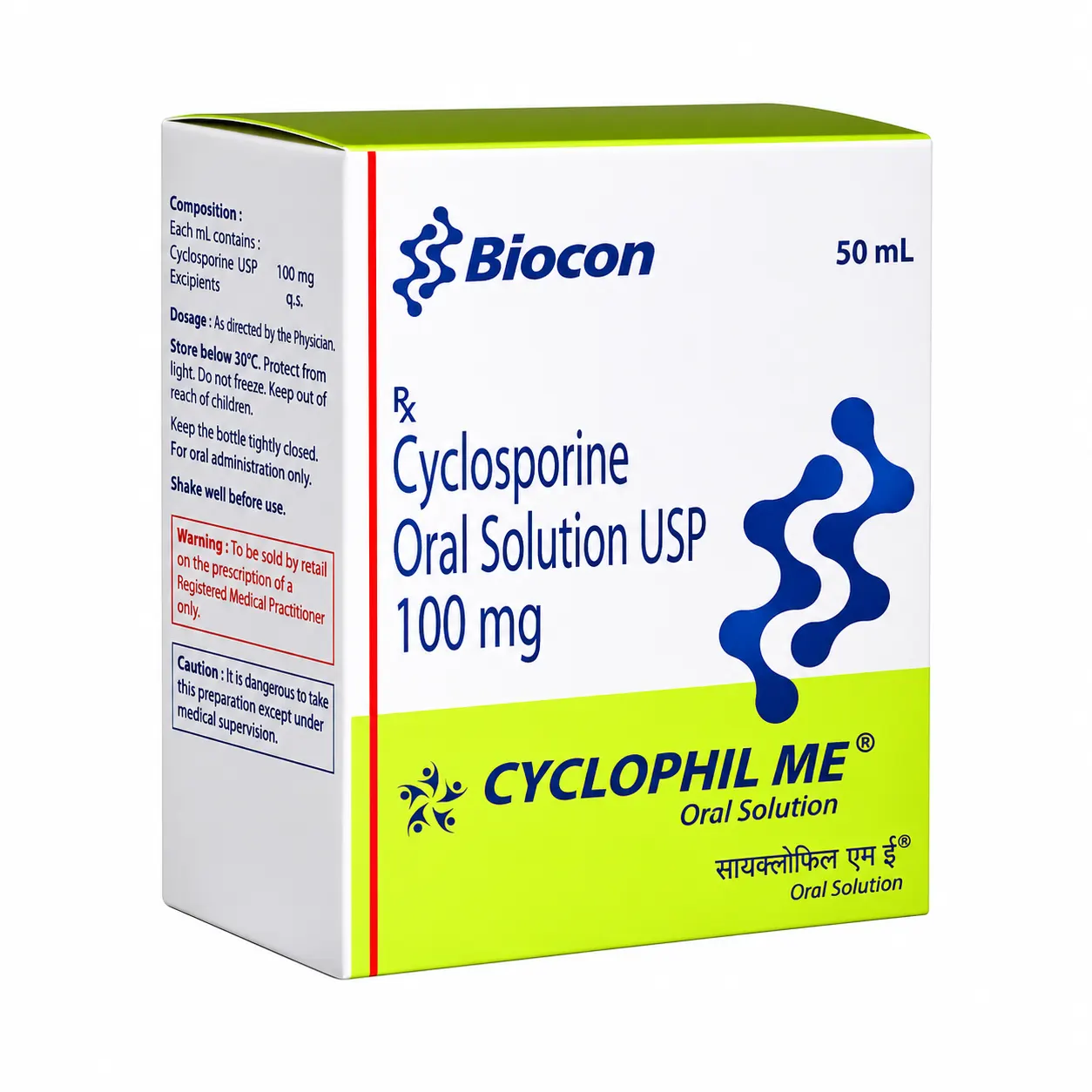
Cyclophil Me 50 Mg (Cyclosporine)
Want to order in bulk / B2B price?
Every order ships with a tracking number. Standard delivery takes 12–15 days.
If your parcel doesn't arrive, choose a new package or a full refund.
Call +1 251-332-4105 or email [email protected].
Share
What Is Cyclophil ME 50 mg?
Cyclophil ME 50 mg Capsules contain cyclosporine, a potent immunosuppressant medicine used to reduce specific immune system responses.
Cyclosporine is commonly prescribed to help prevent rejection following organ transplantation and to manage certain severe autoimmune or inflammatory diseases.
The immune system normally protects the body against infections and harmful substances. However, in autoimmune conditions, immune cells may mistakenly attack healthy tissues.
Following an organ transplant, the immune system may recognize the transplanted organ as foreign and attempt to damage it.
Cyclosporine helps control these immune responses by suppressing the activation of T lymphocytes.
It belongs to a class of medicines called calcineurin inhibitors.
Calcineurin is an enzyme involved in T-cell activation and the production of important immune signaling molecules, including interleukin-2.
By inhibiting calcineurin, cyclosporine reduces T-cell activation and helps limit immune-mediated damage.
Cyclophil ME uses a modified microemulsion formulation designed to provide more consistent absorption compared with older non-modified cyclosporine formulations.
Cyclophil ME 50 mg may be prescribed for:
- Kidney transplant rejection prevention
- Liver transplant rejection prevention
- Heart transplant rejection prevention
- Severe rheumatoid arthritis
- Severe psoriasis
- Selected cases of nephrotic syndrome
- Severe atopic dermatitis in certain countries
- Other specialist-managed immune disorders
The exact approved indications depend on the country and product labeling.
Important: Cyclophil ME is a high-risk prescription immunosuppressant. Treatment requires specialist supervision, regular kidney function tests, blood pressure monitoring, assessment of drug interactions, and cyclosporine blood concentration monitoring when indicated.
How Does Cyclophil ME 50 mg Work?
1. Enters T Lymphocytes
Cyclosporine enters immune cells known as T lymphocytes.
These cells play an important role in immune defense and organ transplant rejection.
2. Binds to Cyclophilin
Inside the immune cell, cyclosporine binds to a protein called cyclophilin.
This produces a cyclosporine-cyclophilin complex.
3. Inhibits Calcineurin
The cyclosporine-cyclophilin complex inhibits the enzyme calcineurin.
Calcineurin is involved in activating T lymphocytes.
4. Reduces Interleukin-2 Production
Calcineurin inhibition decreases the production of certain cytokines, including interleukin-2.
Interleukin-2 plays an important role in T-cell proliferation and immune activation.
5. Suppresses T-Cell Activation
By reducing interleukin-2 signaling, cyclosporine suppresses selected immune responses.
6. Helps Prevent Organ Rejection
Reduced T-cell activity helps lower the risk of immune-mediated damage to transplanted organs.
7. Controls Immune-Mediated Inflammation
Cyclosporine may reduce inflammation and tissue damage associated with selected autoimmune disorders.
It helps control disease activity but does not permanently cure the underlying condition.
Uses of Cyclophil ME 50 mg Capsules
1. Kidney Transplant Rejection Prevention
Cyclosporine is used as part of immunosuppressive treatment following kidney transplantation.
It helps prevent the immune system from attacking the transplanted kidney.
2. Liver Transplant Rejection Prevention
Cyclophil ME may be prescribed following liver transplantation to reduce the risk of organ rejection.
3. Heart Transplant Rejection Prevention
Cyclosporine may be included in immunosuppressive treatment regimens after heart transplantation.
4. Severe Rheumatoid Arthritis
Cyclosporine may be prescribed for selected patients with severe rheumatoid arthritis when other treatments are ineffective, unsuitable, or insufficient.
It helps reduce immune-mediated joint inflammation.
5. Severe Psoriasis
Cyclosporine may be used for severe psoriasis requiring systemic treatment.
It may help reduce inflammatory skin lesions and disease activity.
6. Nephrotic Syndrome
In certain countries, cyclosporine is used for selected forms of nephrotic syndrome under specialist supervision.
Its suitability depends on the underlying kidney condition.
7. Severe Atopic Dermatitis
Cyclosporine may be prescribed for severe atopic dermatitis in selected patients, depending on local regulatory approval.
8. Other Immune-Mediated Disorders
Specialists may prescribe cyclosporine for certain additional immune-mediated conditions when clinically appropriate.
Some uses may be off-label and require individualized assessment.
Important: Not every cyclosporine indication is approved for every Cyclophil ME product. Product listings should distinguish approved indications from specialist-directed off-label uses.
How to Take Cyclophil ME 50 mg Capsules
Cyclophil ME should be taken exactly as prescribed by a qualified healthcare professional.
Step-by-Step Administration Instructions
- Confirm the prescribed cyclosporine formulation.
- Check the prescribed capsule strength and total daily dose.
- Swallow the capsule whole with water.
- Take the medicine at consistent times each day.
- Maintain a consistent routine regarding meals.
- Do not crush or chew the capsule.
- Avoid grapefruit and grapefruit juice.
- Do not switch brands or formulations without medical approval.
- Attend all scheduled blood tests and follow-up appointments.
- Report fever, reduced urination, severe headache, or unusual symptoms promptly.
Dosage Information
The appropriate cyclosporine dose depends on:
- Medical indication
- Body weight
- Organ transplant type
- Time since transplantation
- Kidney function
- Liver function
- Blood cyclosporine concentrations
- Blood pressure
- Concurrent medicines
- Individual treatment response
Cyclosporine dosing varies substantially between transplant recipients and patients treated for autoimmune conditions.
For many patients, the total daily dose is divided into two administrations approximately 12 hours apart.
However, the exact dose and schedule must be determined by the treating specialist.
Important: A 50 mg capsule represents the amount of cyclosporine in one capsule, not a standard daily dose. Patients may require different strengths or combinations of capsule strengths.
Modified vs Non-Modified Cyclosporine
| Formulation | Important Information |
|---|---|
| Modified / Microemulsion Cyclosporine | Designed to provide more consistent absorption |
| Non-Modified Cyclosporine | Has different absorption characteristics |
| Switching Formulations | Requires specialist supervision and appropriate monitoring |
Cyclophil ME is a modified formulation.
Patients should not independently substitute it with non-modified cyclosporine or another brand.
Missed Dose
If a dose is missed, follow the transplant team’s or prescribing specialist’s instructions.
Do not double the next dose.
Transplant recipients should contact their transplant team promptly if doses are missed because inadequate immunosuppression may increase rejection risk.
Important Administration Instructions
- Take only as prescribed.
- Do not stop treatment suddenly.
- Avoid grapefruit products.
- Avoid unnecessary exposure to infections.
- Do not receive live vaccines without specialist approval.
- Do not start new medicines or herbal supplements without checking interactions.
- Monitor blood pressure.
- Attend kidney function and cyclosporine blood-level tests.
- Inform every treating healthcare professional that you take cyclosporine.
How Long Does Cyclophil ME 50 mg Take to Work?
Cyclosporine begins suppressing immune activity after absorption.
However, the time required for a noticeable clinical response depends on the condition being treated.
Organ Transplantation: Immunosuppressive treatment is started according to the transplant protocol, often around the time of transplantation.
Psoriasis: Improvement may become noticeable over several weeks.
Rheumatoid Arthritis: Clinical improvement may take several weeks or months.
Other Immune Disorders: Response varies according to diagnosis and treatment regimen.
Cyclosporine blood concentrations may be monitored to help guide treatment.
Important: Patients should not judge transplant protection solely by how they feel. Organ rejection can occur without obvious early symptoms.
Common Side Effects
Possible side effects include:
- High blood pressure
- Increased serum creatinine
- Reduced kidney function
- Tremor
- Headache
- Nausea
- Vomiting
- Diarrhea
- Abdominal discomfort
- Increased hair growth
- Gum enlargement
- Fatigue
- Tingling sensations
- Increased potassium levels
- Low magnesium levels
- Changes in blood lipid levels
Side effects may depend on the dose, treatment duration, and individual susceptibility.
Serious Side Effects
Seek urgent medical attention if you experience:
- Significantly reduced urine output
- Severe or persistent headache
- Seizures
- Confusion
- Vision disturbances
- Severe hypertension
- Chest pain
- Shortness of breath
- High fever or serious infection symptoms
- Severe allergic reactions
- Unusual swelling
- Signs of serious liver dysfunction
Important Serious Adverse Reactions
Nephrotoxicity: Cyclosporine can cause acute or chronic kidney injury.
Severe Hypertension: Blood pressure may rise significantly during treatment.
Serious Infections: Immunosuppression increases susceptibility to bacterial, viral, fungal, and opportunistic infections.
Malignancy Risk: Long-term immunosuppression increases the risk of certain cancers, particularly lymphoma and skin cancer.
Neurotoxicity: Serious neurological complications may include seizures, confusion, and posterior reversible encephalopathy syndrome (PRES).
Electrolyte Disturbances: Cyclosporine may cause hyperkalemia and hypomagnesemia.
Hepatotoxicity: Liver function abnormalities may occur.
Thrombotic Microangiopathy: Rare but serious blood-vessel complications may occur, particularly in transplant settings.
Contraindications & Precautions
1. Allergy to Cyclosporine
Do not use in patients with known hypersensitivity to cyclosporine or other capsule ingredients.
2. Kidney Impairment
Cyclosporine can impair kidney function.
Patients require kidney function monitoring, and treatment may need adjustment.
3. High Blood Pressure
Cyclosporine may cause or worsen hypertension.
Regular blood pressure monitoring is essential.
4. Active Infections
Patients with serious infections require careful medical assessment because cyclosporine suppresses immune function.
5. Malignancy Risk
Long-term immunosuppressive therapy increases the risk of certain malignancies.
6. Liver Impairment
Patients with hepatic impairment may have altered cyclosporine exposure and require dose adjustment.
7. Hyperkalemia
Cyclosporine may increase potassium levels.
Patients taking potassium supplements or potassium-sparing medicines require caution.
8. Hypomagnesemia
Cyclosporine may reduce magnesium levels.
Monitoring may be necessary.
9. Neurological Disorders
Patients with seizures or other neurological conditions require careful assessment.
10. Pregnancy
Cyclosporine use during pregnancy requires specialist assessment of potential maternal benefits and fetal risks.
Transplant recipients should not stop immunosuppression without medical guidance.
11. Breastfeeding
Cyclosporine passes into breast milk.
Breastfeeding decisions require individualized specialist assessment.
12. Vaccination
Live vaccines should generally be avoided during significant immunosuppression.
Patients should discuss vaccination plans with their healthcare professional.
13. Sun Exposure
Cyclosporine may increase the risk of skin cancer.
Patients should use appropriate sun protection and undergo skin examinations when indicated.
14. Grapefruit Interaction
Grapefruit and grapefruit juice can increase cyclosporine exposure.
They should be avoided during treatment.
15. Medication Interactions
Cyclosporine has numerous clinically important interactions.
Potentially relevant medicines include:
- Clarithromycin
- Erythromycin
- Ketoconazole
- Itraconazole
- Voriconazole
- Rifampin
- Carbamazepine
- Phenytoin
- Certain statins
- Tacrolimus
- Other nephrotoxic medicines
- Ibuprofen
- Diclofenac
- Naproxen
- Aminoglycoside antibiotics
- Potassium-sparing diuretics
- ACE inhibitors
- Angiotensin receptor blockers
- St. John’s wort
Some medicines may increase cyclosporine levels, while others may reduce them.
Cyclosporine can also increase exposure to certain other medicines.
16. Brand and Formulation Switching
Modified and non-modified cyclosporine products are not automatically interchangeable.
Switching products may alter drug exposure and increase the risk of toxicity or inadequate immunosuppression.
17. Long-Term Treatment
Long-term cyclosporine use requires monitoring for kidney damage, hypertension, infections, malignancies, and other adverse effects.
18. Medical Monitoring
Healthcare professionals may monitor:
- Cyclosporine blood concentrations
- Serum creatinine
- Estimated glomerular filtration rate
- Blood pressure
- Liver function
- Potassium levels
- Magnesium levels
- Blood lipid levels
- Blood glucose when indicated
- Infection symptoms
- Signs of organ rejection
- Gum enlargement
- Skin changes
- Medication interactions
- Treatment adherence
Advantages
- Contains cyclosporine 50 mg.
- Belongs to the calcineurin inhibitor class.
- Helps prevent organ transplant rejection.
- Suppresses selected immune responses.
- May help manage severe autoimmune conditions.
- Used in specialist transplant treatment protocols.
- May reduce inflammatory symptoms in selected conditions.
- Available in modified microemulsion formulation.
- Designed for more consistent absorption than older non-modified formulations.
- Available in oral capsule form.
- Can be combined with other immunosuppressants when prescribed.
- Supports individualized dose adjustment.
- Has an established role in transplant medicine.
Disadvantages / Limitations
- Requires specialist prescription.
- Can cause kidney toxicity.
- May increase blood pressure.
- Increases susceptibility to infections.
- May increase malignancy risk.
- Requires regular blood tests.
- May cause tremors.
- May cause gum enlargement.
- May cause increased hair growth.
- May cause electrolyte disturbances.
- Has numerous drug interactions.
- Interacts with grapefruit.
- Requires careful formulation consistency.
- May cause neurological complications.
- May affect liver function.
- Requires long-term monitoring.
- Does not permanently cure autoimmune diseases.
- Not suitable for every patient.
Important Notes
Brand Name: Cyclophil ME.
Active Ingredient: Cyclosporine.
Strength: 50 mg.
Manufacturer: Panacea Biotec Ltd.; verify current packaging.
Dosage Form: Oral Soft Gelatin Capsule.
Formulation: Modified / Microemulsion.
Drug Class: Calcineurin Inhibitor.
Therapeutic Category: Immunosuppressant.
Primary Uses: Organ transplant rejection prevention and selected autoimmune conditions.
Mechanism of Action: Inhibition of calcineurin-mediated T-cell activation.
Administration Route: Oral.
Dosage: Individualized according to specialist assessment.
Blood Monitoring: Cyclosporine concentrations may require regular testing.
Kidney Precaution: Risk of nephrotoxicity.
Blood Pressure Precaution: May cause hypertension.
Infection Warning: Increased risk of serious infections.
Malignancy Warning: Long-term immunosuppression may increase cancer risk.
Drug Interaction Precaution: Numerous clinically important interactions.
Grapefruit Warning: Avoid grapefruit and grapefruit juice.
Formulation Warning: Do not switch modified and non-modified products without specialist supervision.
Storage: Follow manufacturer instructions.
Frequently Asked Questions
1. What is Cyclophil ME 50 mg used for?
Cyclophil ME 50 mg contains cyclosporine, an immunosuppressant used to help prevent organ transplant rejection and manage selected autoimmune conditions.
2. What is the active ingredient in Cyclophil ME 50 mg?
The active ingredient is cyclosporine 50 mg.
3. What does ME mean in Cyclophil ME?
ME refers to the modified microemulsion formulation, designed to provide more consistent cyclosporine absorption.
4. Is Cyclophil ME an immunosuppressant?
Yes. Cyclosporine is a calcineurin inhibitor that suppresses certain immune responses.
5. Can Cyclophil ME prevent kidney transplant rejection?
Yes. Cyclosporine is used as part of immunosuppressive treatment following kidney transplantation.
6. Can Cyclophil ME be used after liver transplantation?
Yes. Cyclosporine may be included in treatment regimens following liver transplantation.
7. Can Cyclophil ME treat psoriasis?
Cyclosporine may be prescribed for severe psoriasis in selected patients under specialist supervision.
8. Can Cyclophil ME treat rheumatoid arthritis?
Yes. Cyclosporine may be used for selected patients with severe rheumatoid arthritis when clinically appropriate.
9. How does Cyclophil ME work?
It inhibits calcineurin, reducing T-cell activation and certain immune responses.
10. How should Cyclophil ME 50 mg Capsules be taken?
Take the capsules orally according to the prescribed schedule. Swallow them whole and maintain a consistent routine.
11. Can Cyclophil ME cause kidney problems?
Yes. Cyclosporine can cause kidney toxicity, making regular kidney function monitoring essential.
12. Can Cyclophil ME increase blood pressure?
Yes. Hypertension is a recognized adverse effect.
| Product Details | Information |
|---|---|
| Product Name | Cyclophil ME 50 mg Capsules |
| Brand Name | Cyclophil ME |
| Generic Name | Cyclosporine (Ciclosporin) |
| Active Ingredient | Cyclosporine 50 mg |
| Strength | 50 mg per capsule |
| Dosage Form | Oral Soft Gelatin Capsule |
| Formulation | Modified / Microemulsion Cyclosporine |
| Route of Administration | Oral |
| Manufacturer | Panacea Biotec Ltd. (verify current packaging) |
| Therapeutic Category | Immunosuppressants / Organ Transplant Medicines |
| Drug Class | Calcineurin Inhibitor |
| Primary Uses | Prevention of organ transplant rejection and treatment of selected autoimmune diseases |
| Other Uses | Severe psoriasis, rheumatoid arthritis, nephrotic syndrome, and other specialist-managed immune conditions, depending on local approval |
| Pack Size | Varies by manufacturer and market |
| Prescription Status | Prescription-Only Medicine |
| Storage | Store according to the manufacturer's instructions, protected from excessive heat and moisture |
| Pack sizes | 30 capsules, 60 capsules, 90 capsules |
Related products
-
 $21.00 – $56.00Price range: $21.00 through $56.00 Choose Pack This product has multiple variants. The options may be chosen on the product page
-
 $16.00 – $86.00Price range: $16.00 through $86.00 Choose Pack This product has multiple variants. The options may be chosen on the product page
-
 $11.00 – $48.00Price range: $11.00 through $48.00 Choose Pack This product has multiple variants. The options may be chosen on the product page
-
 $25.00 – $200.00Price range: $25.00 through $200.00 Choose Pack This product has multiple variants. The options may be chosen on the product page
Reviews
There are no reviews yet.