





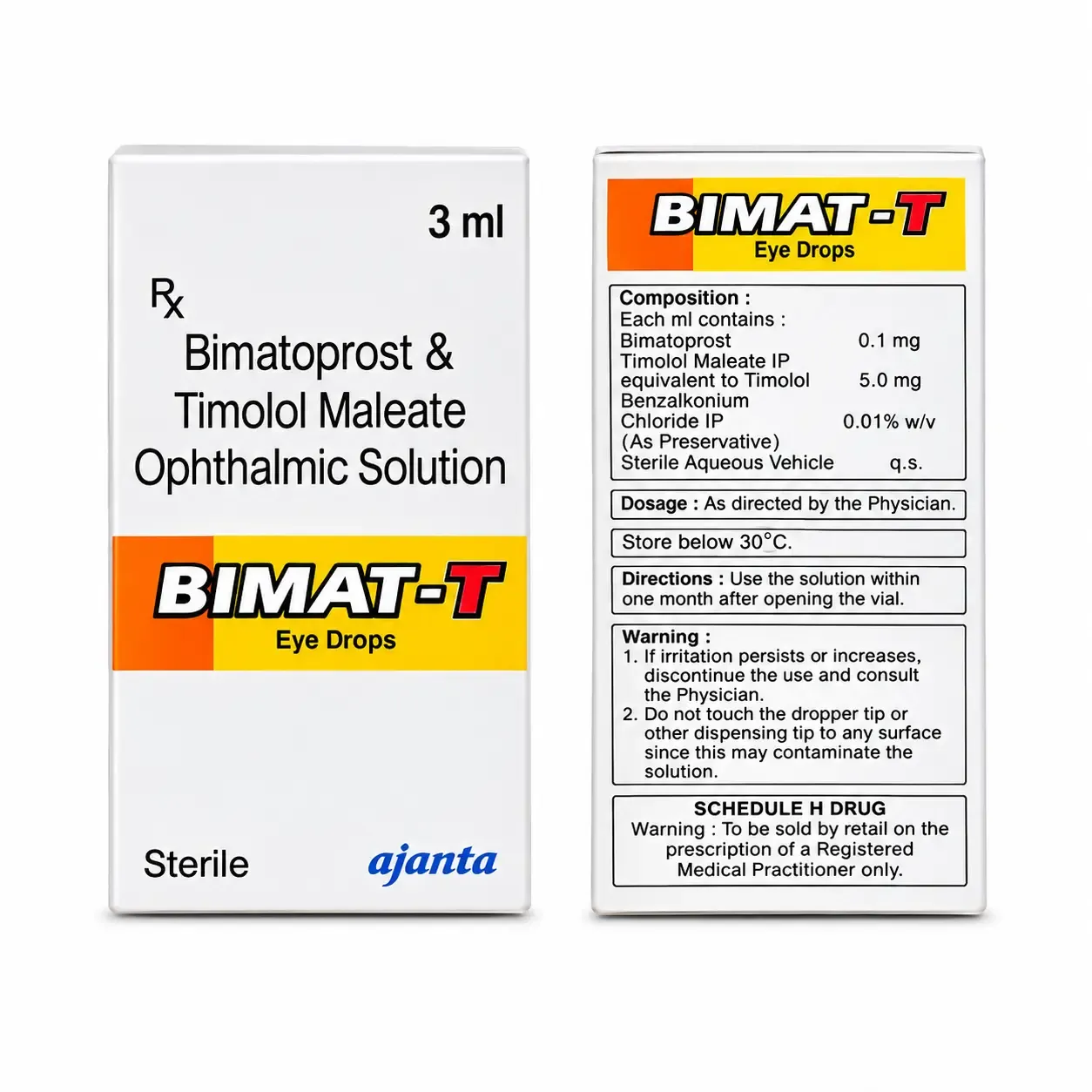
Bimat-T Eye Drop
Want to order in bulk / B2B price?
Every order ships with a tracking number. Standard delivery takes 12–15 days.
If your parcel doesn't arrive, choose a new package or a full refund.
Call +1 251-332-4105 or email [email protected].
Share
What Is Bimat-T Eye Drops?
Bimat-T Eye Drops is a combination ophthalmic medicine containing Bimatoprost and Timolol Maleate, primarily used to reduce elevated intraocular pressure (IOP) in patients with open-angle glaucoma or ocular hypertension.
Glaucoma is a group of eye conditions that can damage the optic nerve, potentially resulting in irreversible vision loss. Elevated intraocular pressure is an important risk factor for glaucoma progression.
Bimat-T combines two medicines that lower eye pressure through different mechanisms, helping provide effective pressure control when a single medication does not adequately manage the condition.
Regular use, as prescribed by an ophthalmologist, helps reduce the risk of further pressure-related optic nerve damage.
How Does Bimat-T Eye Drops Work?
Bimat-T contains two active ingredients with complementary mechanisms of action.
1. Bimatoprost (0.03%)
Bimatoprost is a prostamide analogue that lowers intraocular pressure by increasing the drainage of aqueous humor, the fluid naturally present inside the eye.
It improves fluid outflow through the uveoscleral and trabecular pathways.
2. Timolol Maleate (0.5%)
Timolol is a non-selective beta-adrenergic receptor blocker.
It reduces the production of aqueous humor within the eye, helping decrease intraocular pressure.
Combined Action
Bimatoprost increases fluid drainage, while Timolol reduces fluid production.
Together, these mechanisms provide complementary intraocular pressure reduction in patients requiring combination glaucoma therapy.
How to Use Bimat-T Eye Drops
- Use only according to your ophthalmologist’s prescription.
- Wash your hands thoroughly before application.
- Tilt your head backward and gently pull down the lower eyelid.
- Instill the prescribed number of drops into the affected eye.
- Avoid touching the dropper tip to your eye, fingers, or other surfaces.
- Close your eyes gently after application.
- Apply gentle pressure to the inner corner of the eye for approximately two minutes to reduce systemic absorption.
- If using other ophthalmic medicines, maintain an interval of at least five minutes between applications.
- Follow the prescribed treatment schedule consistently.
Commonly Recommended Dosage: For the bimatoprost 0.03% and timolol 0.5% fixed-dose combination, the usual regimen is one drop in the affected eye or eyes once daily, as directed by the ophthalmologist.
Do not administer more frequently than prescribed.
Common Side Effects
Possible side effects include:
- Eye redness
- Burning or stinging sensation
- Eye itching
- Temporary blurred vision
- Eye irritation
- Dry eyes
- Increased eyelash growth
- Darkening of eyelid skin
- Increased brown iris pigmentation
- Foreign-body sensation
- Headache
- Eye discomfort
Some pigmentation changes, particularly increased brown iris pigmentation, may be permanent.
Serious Side Effects
Seek immediate medical attention if you experience:
- Slow or irregular heartbeat
- Severe dizziness or fainting
- Difficulty breathing or wheezing
- Chest pain
- Severe eye pain
- Sudden vision changes
- Significant eye inflammation
- Severe allergic reactions
- Symptoms of worsening heart failure
Important: Timolol can be absorbed into the bloodstream even when administered as eye drops. It may cause cardiovascular or respiratory side effects, particularly in susceptible patients.
Contraindications & Precautions
Before using Bimat-T Eye Drops, inform your healthcare professional if you have:
- Bronchial asthma or a history of asthma.
- Severe chronic obstructive pulmonary disease (COPD).
- Sinus bradycardia (abnormally slow heart rate).
- Second- or third-degree atrioventricular heart block without a pacemaker.
- Overt heart failure or cardiogenic shock.
- A history of severe allergic reactions.
- Diabetes or episodes of low blood sugar.
- Thyroid disorders.
- Eye inflammation or uveitis.
- Risk factors for macular edema.
- Recent eye surgery.
- Pregnancy or breastfeeding.
- Other prescription eye medicines.
Respiratory Conditions: Timolol may cause bronchospasm and is contraindicated in patients with bronchial asthma and certain severe respiratory conditions.
Heart Conditions: Timolol can reduce heart rate and blood pressure. Patients with relevant cardiovascular disorders require careful medical assessment.
Diabetes: Beta-blockers may mask some warning symptoms of low blood sugar, such as a rapid heartbeat.
Contact Lenses: If the formulation contains benzalkonium chloride, remove soft contact lenses before application and wait at least 15 minutes before reinserting them.
Eye Pigmentation: Bimatoprost may gradually increase brown iris pigmentation, which can be permanent.
Advantages
- Combines two established intraocular pressure-lowering medicines.
- Helps manage open-angle glaucoma and ocular hypertension.
- Increases aqueous humor drainage through Bimatoprost.
- Reduces aqueous humor production through Timolol.
- Provides complementary pressure-lowering mechanisms.
- May help patients whose eye pressure is not adequately controlled with a single medicine.
- Convenient fixed-dose combination.
- Commonly administered once daily.
- May reduce the risk of further pressure-related optic nerve damage.
Disadvantages / Limitations
- May cause redness, itching, or eye irritation.
- Can permanently increase brown iris pigmentation.
- May cause eyelash and eyelid appearance changes.
- Timolol can produce systemic cardiovascular side effects.
- Not suitable for patients with asthma or certain heart conditions.
- Requires regular eye-pressure monitoring.
- Does not restore vision already lost due to glaucoma.
- Does not permanently cure glaucoma.
- Requires consistent treatment adherence.
- May interact with certain cardiovascular medicines.
Important Notes
Bimat-T Eye Drops is a prescription medicine intended for the management of elevated intraocular pressure.
Glaucoma can progress without noticeable symptoms. Therefore, patients should attend regular ophthalmic examinations even when their vision appears normal.
Do not stop treatment without consulting your ophthalmologist.
Patients with asthma, breathing difficulties, heart rhythm disorders, or heart failure should inform their healthcare professional before using this medicine.
If you experience breathing difficulty, severe dizziness, fainting, or an unusually slow heartbeat, seek immediate medical attention.
Store according to the manufacturer’s instructions and avoid contaminating the dropper tip.
Frequently Asked Questions
What is Bimat-T Eye Drops used for?
Bimat-T Eye Drops is used to reduce elevated intraocular pressure in patients with open-angle glaucoma or ocular hypertension.
What are the active ingredients in Bimat-T Eye Drops?
It contains Bimatoprost and Timolol Maleate, two medicines that lower eye pressure through different mechanisms.
How does Bimat-T Eye Drops work?
Bimatoprost increases fluid drainage from the eye, while Timolol reduces fluid production. Together, they help lower intraocular pressure.
How often should Bimat-T Eye Drops be used?
The commonly recommended regimen for the standard fixed-dose combination is one drop in the affected eye or eyes once daily. Follow your ophthalmologist’s instructions.
Can Bimat-T Eye Drops cure glaucoma?
No. Bimat-T helps control intraocular pressure but does not permanently cure glaucoma or reverse existing optic nerve damage.
Can Bimat-T Eye Drops change eye color?
Yes. Bimatoprost may gradually increase brown pigmentation of the iris, and the change may be permanent.
Can Bimat-T Eye Drops affect heart rate?
Yes. Timolol may slow the heart rate and affect cardiovascular function, especially in patients with existing heart conditions.
Can asthma patients use Bimat-T Eye Drops?
Bimat-T is generally contraindicated in patients with bronchial asthma because Timolol can cause bronchospasm.
Can Bimat-T Eye Drops cause eyelash growth?
Yes. Bimatoprost may increase eyelash length, thickness, pigmentation, and number.
Is Bimat-T Eye Drops a steroid or hormone?
No. Bimat-T contains a prostamide analogue and a beta-adrenergic blocker. It is not a corticosteroid or hormone-replacement medicine.
Can I use Bimat-T with other glaucoma medicines?
Your ophthalmologist may prescribe additional medicines when appropriate. However, using multiple beta-blocker eye drops together is generally not recommended.
Can I stop using Bimat-T when my eyes feel normal?
No. Elevated eye pressure may not cause noticeable symptoms. Continue treatment unless your ophthalmologist advises otherwise.
| Product Name | Bimat-T Eye Drops |
|---|---|
| Brand Name | Bimat-T |
| Active Ingredients | Bimatoprost + Timolol Maleate |
| Commonly Listed Strength | Bimatoprost 0.03% w/v + Timolol 0.5% w/v |
| Dosage Form | Ophthalmic Solution / Eye Drops |
| Route of Administration | Ophthalmic (Eye Use) |
| Manufacturer | Ajanta Pharma Ltd. |
| Therapeutic Class | Prostaglandin Analogue + Beta-Adrenergic Blocker |
| Category | Eye Care / Glaucoma Treatment |
| Prescription Status | Prescription medicine |
| Pack sizes | 2 eye drops, 4 eye drops, 6 eye drops |
Related products
-
 $69.00 – $200.00Price range: $69.00 through $200.00 Choose Pack This product has multiple variants. The options may be chosen on the product page
-
 $16.00 – $86.00Price range: $16.00 through $86.00 Choose Pack This product has multiple variants. The options may be chosen on the product page
-
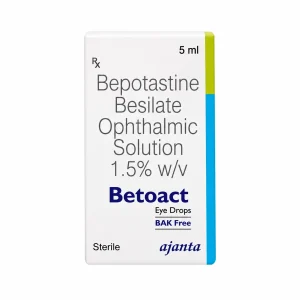 $11.00 – $48.00Price range: $11.00 through $48.00 Choose Pack This product has multiple variants. The options may be chosen on the product page
-
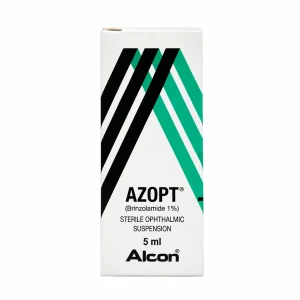 $32.00 – $118.00Price range: $32.00 through $118.00 Choose Pack This product has multiple variants. The options may be chosen on the product page
Reviews
There are no reviews yet.