var wc_single_product_params = {"i18n_required_rating_text":"Please select a rating","i18n_rating_options":["1 of 5 stars","2 of 5 stars","3 of 5 stars","4 of 5 stars","5 of 5 stars"],"i18n_product_gallery_trigger_text":"View full-screen image gallery","review_rating_required":"yes","flexslider":{"rtl":false,"animation":"slide","smoothHeight":true,"directionNav":true,"controlNav":"thumbnails","slideshow":false,"animationSpeed":500,"animationLoop":false,"allowOneSlide":false},"zoom_enabled":"1","zoom_options":[],"photoswipe_enabled":"1","photoswipe_options":{"shareEl":false,"closeOnScroll":false,"history":false,"hideAnimationDuration":0,"showAnimationDuration":0},"flexslider_enabled":"1"};
//# sourceURL=wc-single-product-js-extra
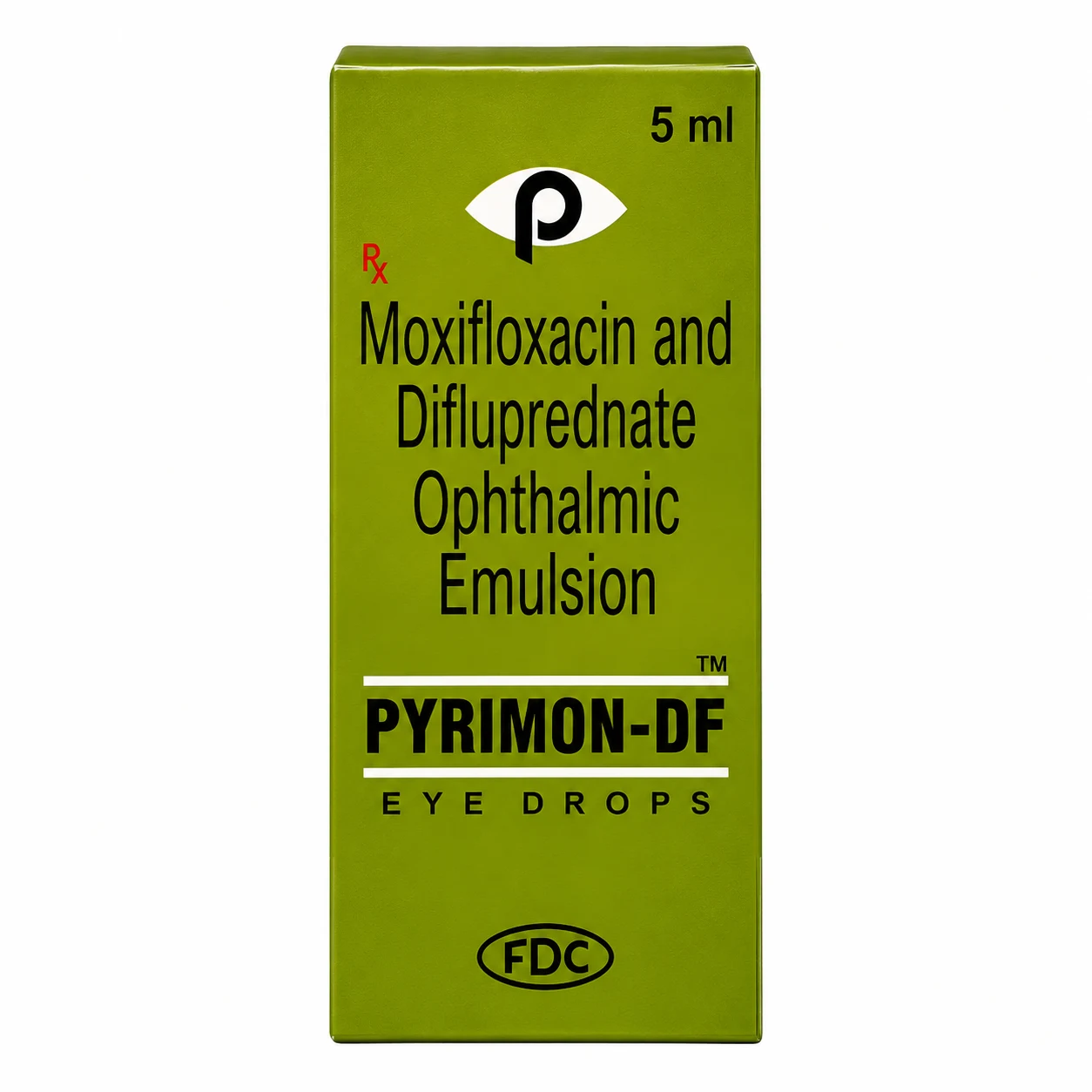
Pyrimon 5 ml Eye Drop is a prescription ophthalmic medication containing Chloramphenicol 1% w/v and Dexamethasone 0.1% w/v. Manufactured by FDC Ltd., it combines antibacterial and anti-inflammatory properties to manage selected bacterial eye infections accompanied by inflammation.
Chloramphenicol is a broad-spectrum antibiotic that inhibits bacterial protein synthesis, preventing susceptible bacteria from growing and multiplying. Dexamethasone is a corticosteroid that helps suppress inflammatory responses within ocular tissues.
The combination may help manage symptoms such as redness, swelling, discomfort, and irritation when associated with an appropriately diagnosed bacterial eye infection.
Pyrimon 5 ml should only be used when an ophthalmologist determines that both antibacterial and corticosteroid treatment are necessary.
It is not suitable for routine dry eye treatment, undiagnosed eye redness, or viral and fungal eye infections.
Composition of Pyrimon 5 ml
Chloramphenicol 1% w/v
Chloramphenicol is a broad-spectrum antibiotic that acts against various susceptible Gram-positive and Gram-negative bacteria.
It works by binding to the bacterial 50S ribosomal subunit, interfering with protein synthesis and inhibiting bacterial multiplication.
Dexamethasone 0.1% w/v
Dexamethasone is a potent corticosteroid that helps control inflammation by regulating inflammatory signaling pathways.
It reduces the production and activity of inflammatory mediators associated with redness, swelling, and ocular discomfort.
How Does Pyrimon 5 ml Work?
Pyrimon Eye Drop combines two active ingredients with complementary mechanisms of action.
1. Inhibits Bacterial Protein Synthesis
Chloramphenicol interferes with bacterial ribosomal activity, preventing susceptible bacteria from producing proteins necessary for growth and reproduction.
2. Controls Bacterial Multiplication
By inhibiting bacterial protein synthesis, Chloramphenicol helps control susceptible bacterial infections.
3. Reduces Inflammatory Activity
Dexamethasone acts through glucocorticoid receptors to suppress inflammatory processes within ocular tissues.
4. Helps Manage Redness and Swelling
The corticosteroid component may reduce inflammation-related redness, swelling, and discomfort associated with the diagnosed condition.
5. Provides Combined Antibacterial and Anti-Inflammatory Treatment
The combination addresses bacterial infection and inflammation simultaneously when both treatments are clinically indicated.
However, corticosteroids may mask infection symptoms or worsen certain untreated infections, making accurate diagnosis essential.
Uses and Benefits of Pyrimon 5 ml
1. Bacterial Eye Infections
Pyrimon Eye Drop may be prescribed for selected ocular infections caused by bacteria susceptible to Chloramphenicol, where corticosteroid treatment is also appropriate.
Bacterial eye infections may cause:
Eye redness
Eyelid swelling
Sticky eye discharge
Excessive watering
Eye discomfort
Eyelid crusting
2. Bacterial Conjunctivitis
Pyrimon 5 ml may be prescribed for selected cases of bacterial conjunctivitis accompanied by significant inflammation.
Bacterial conjunctivitis affects the conjunctiva, the thin membrane covering the white portion of the eye and inner eyelids.
Routine bacterial conjunctivitis does not necessarily require corticosteroid treatment.
3. Inflammatory Eye Conditions
Pyrimon may be considered for certain steroid-responsive ocular inflammatory conditions when a susceptible bacterial infection or a clinically significant risk of bacterial infection is present.
4. Selected Eyelid Infections
An ophthalmologist may prescribe Pyrimon for certain inflammatory eyelid conditions associated with bacterial infection.
Treatment depends on the underlying cause, severity, and patient’s medical history.
5. Postoperative Eye Care
Pyrimon may be considered in selected postoperative situations when combined antibacterial and anti-inflammatory treatment is clinically indicated.
The operating ophthalmologist must determine the appropriate medication, application frequency, and treatment duration.
6. Management of Infection-Related Discomfort
By addressing susceptible bacteria and associated inflammatory responses, Pyrimon may help reduce ocular discomfort during treatment.
It is not intended to provide general relief from eye strain, dryness, or unexplained irritation.
Key Features of Pyrimon 5 ml
Contains Chloramphenicol 1% w/v
Contains Dexamethasone 0.1% w/v
Combination antibiotic and corticosteroid formulation
Broad antibacterial activity against susceptible organisms
Inhibits bacterial protein synthesis
Helps control selected ocular inflammatory conditions
May reduce infection-associated redness and swelling
Available in a convenient 5 ml bottle
Designed for topical ophthalmic administration
Manufactured by FDC Ltd.
Requires appropriate ophthalmic monitoring
Prescription-only medication
How to Use Pyrimon 5 ml Eye Drops
Pyrimon Eye Drop should be used exactly as prescribed by an ophthalmologist.
Step-by-Step Administration Instructions
Wash your hands thoroughly with soap and water.
Remove the bottle cap carefully.
Tilt your head backward slightly.
Gently pull down the lower eyelid to create a small pocket.
Hold the dropper above the affected eye.
Instill the prescribed number of drops into the lower eyelid pocket.
Close your eye gently without blinking excessively.
Apply gentle pressure to the inner corner of the eye for approximately one minute.
Wipe away excess solution using a clean tissue.
Replace the bottle cap securely.
Wash your hands after administration.
Avoid touching the dropper tip to the eyes, eyelids, fingers, or other surfaces to prevent contamination.
If you are using multiple ophthalmic medications, maintain an interval of at least five minutes between applications unless otherwise instructed by your ophthalmologist.
Recommended Dosage
The appropriate dosage and treatment duration of Pyrimon 5 ml depend on several factors, including:
Type of bacterial eye infection
Severity of inflammation
Patient’s age and medical history
Corneal health
Intraocular pressure
Other ophthalmic medications
Response to treatment
The application frequency and treatment duration must be determined by a qualified healthcare professional.
Do not increase the number of drops or extend the treatment period without medical advice.
Prolonged use of Chloramphenicol and Dexamethasone may increase the risk of serious adverse reactions, secondary infections, glaucoma, cataracts, and delayed ocular healing.
Important: Pyrimon 5 ml should only be used for the specific condition and duration recommended by an ophthalmologist.
Possible Side Effects of Pyrimon 5 ml
Like other prescription ophthalmic medications, Pyrimon may cause side effects. Not everyone experiences them.
Common Side Effects
Temporary burning sensation
Mild eye irritation
Stinging sensation
Temporary blurred vision
Eye discomfort
Increased watering
Eye redness
Foreign body sensation
These effects may be temporary. Persistent or worsening symptoms should be discussed with an ophthalmologist.
Serious Side Effects
Although less common, Pyrimon may cause serious adverse reactions, including:
Increased intraocular pressure
Glaucoma
Optic nerve damage
Posterior subcapsular cataracts
Delayed corneal healing
Secondary bacterial or fungal infections
Worsening of viral eye infections
Corneal thinning or perforation in susceptible patients
Severe allergic reactions
Rare but serious blood cell disorders associated with Chloramphenicol
Aplastic anemia
Seek urgent ophthalmic care if you experience severe eye pain, sudden vision changes, increasing sensitivity to light, or worsening redness.
Unexplained bruising, unusual bleeding, persistent fever, sore throat, or severe fatigue may indicate a blood-related complication and require prompt medical evaluation.
Seek emergency medical attention if you develop difficulty breathing, facial swelling, or other signs of a severe allergic reaction.
Warnings and Precautions
Before using Pyrimon 5 ml, inform your ophthalmologist about existing medical conditions, allergies, and medications.
1. Chloramphenicol Allergy
Patients with known hypersensitivity to Chloramphenicol should not use Pyrimon Eye Drop.
2. Corticosteroid Allergy
Patients with known hypersensitivity to Dexamethasone or other ingredients in the formulation should avoid this medication.
3. Blood Disorders
Chloramphenicol has been associated with rare but potentially life-threatening bone marrow disorders.
Patients with a personal or family history of aplastic anemia or other serious blood disorders should inform their healthcare professional before use.
Avoid unnecessary, repeated, or prolonged treatment.
4. Glaucoma
Dexamethasone may increase intraocular pressure, especially during prolonged treatment.
Patients with glaucoma or a history of elevated intraocular pressure require careful ophthalmic assessment.
5. Viral Eye Infections
Pyrimon should not be used for certain viral eye infections, including epithelial herpes simplex keratitis.
Corticosteroids may worsen viral infections and delay appropriate treatment.
6. Fungal Eye Infections
Pyrimon is not an antifungal medication. Its corticosteroid component may worsen fungal infections.
7. Corneal Disorders
Patients with corneal thinning, ulceration, or other corneal abnormalities require specialist evaluation before using corticosteroid-containing eye drops.
8. Contact Lenses
Avoid wearing contact lenses during an active eye infection.
Consult your ophthalmologist before resuming contact lens use.
9. Pregnancy
Pyrimon should only be used during pregnancy after a healthcare professional evaluates the potential benefits and risks.
10. Breastfeeding
Breastfeeding individuals should consult their healthcare professional before using Chloramphenicol and Dexamethasone ophthalmic preparations.
11. Children and Infants
Pyrimon should only be administered to children under appropriate medical supervision.
Special precautions apply to infants and young children.
12. Driving and Operating Machinery
Pyrimon may cause temporary blurred vision immediately following application.
Avoid driving or operating machinery until your vision becomes clear.
13. Long-Term Use
Prolonged or repeated use of ophthalmic corticosteroids may increase the risk of glaucoma, cataracts, delayed healing, and secondary infections.
Intraocular pressure monitoring is particularly important when ophthalmic steroid treatment continues for ten days or longer.
Drug Interactions
Pyrimon Eye Drop may interact with certain medications or affect the safety of concurrent treatment.
Important considerations include:
Medicines That Suppress Bone Marrow: Concurrent use may increase concerns about blood-related adverse effects.
Other Ophthalmic Corticosteroids: May increase the risk of steroid-associated ocular complications.
Ophthalmic NSAIDs: Concurrent use may increase the risk of delayed ocular healing.
Other Antibiotic Eye Drops: Combination therapy should only be used when prescribed.
Glaucoma Medications: Patients receiving treatment for elevated intraocular pressure may require additional monitoring.
Always inform your healthcare professional about prescription medicines, over-the-counter products, supplements, and other ophthalmic medications you are using.
Additional medical assessment is necessary for patients with:
Glaucoma
A history of bone marrow disorders
Corneal thinning
Previous corticosteroid-related complications
Delayed ocular healing
Recurrent or persistent eye infections
Pyrimon should not be used for undiagnosed eye redness or without an appropriate prescription.
Storage Instructions
To maintain the quality and effectiveness of Pyrimon 5 ml:
Store below 30°C or according to the manufacturer’s packaging instructions.
Protect from excessive heat and direct sunlight.
Keep the bottle tightly closed when not in use.
Avoid touching or contaminating the dropper tip.
Keep out of reach of children and pets.
Do not use after the expiration date.
Follow the manufacturer’s instructions regarding disposal after opening.
Do not share the eye drop bottle with other individuals.
Do not use the solution if contamination is suspected.
Frequently Asked Questions (FAQs)
Q1. What is Pyrimon 5 ml used for?
Pyrimon 5 ml is a prescription combination eye medication used for selected bacterial eye infections accompanied by inflammation when both antibiotic and corticosteroid treatment are appropriate.
Q2. What are the active ingredients in Pyrimon Eye Drop?
Pyrimon contains Chloramphenicol 1% w/v and Dexamethasone 0.1% w/v.
Q3. Is Pyrimon an antibiotic eye drop?
Yes. Pyrimon contains Chloramphenicol, an antibiotic combined with Dexamethasone, a corticosteroid.
Q4. Is Pyrimon a steroid eye drop?
Yes. Pyrimon contains Dexamethasone, a corticosteroid that helps suppress ocular inflammation.
Q5. How does Pyrimon Eye Drop work?
Chloramphenicol inhibits bacterial protein synthesis, while Dexamethasone suppresses inflammatory responses within ocular tissues.
Q6. Can Pyrimon be used for conjunctivitis?
Pyrimon may be prescribed for selected cases of bacterial conjunctivitis. It is not suitable for every type of conjunctivitis, particularly viral or fungal infections.
Product Details
Description
Product Name
Pyrimon 5 ml
Generic Name
Chloramphenicol + Dexamethasone
Active Ingredients
Chloramphenicol 1% w/v + Dexamethasone 0.1% w/v
Pack Size
5 ml
Manufacturer
FDC Ltd.
Dosage Form
Ophthalmic Solution
Drug Category
Eye Care Medicine
Drug Class
Antibiotic + Corticosteroid
Primary Use
Selected bacterial eye infections with associated inflammation
Route of Administration
Ophthalmic (Eye)
Prescription Required
Yes
Storage Conditions
Store below 30°C or according to the product label
Country of Origin
India
Pack sizes
3 eye drops, 6 eye drops, 9 eye drops
Reviews
There are no reviews yet.
Be the first to review “Pyrimon 5 ml” Cancel reply
var kirkiViewports = {"md":{"value":1200,"scale":1,"minWidth":1200,"maxWidth":1200,"title":"Desktop","icon":"desktop","activeIcon":"desktop-hover","id":"md","type":"max"},"tablet":{"value":1199,"scale":1,"minWidth":1199,"maxWidth":1199,"title":"Tablet","icon":"tablet-default","activeIcon":"tablet-hover","type":"max","id":"tablet"},"mobile":{"value":767,"scale":1,"minWidth":767,"maxWidth":767,"title":"Phone","icon":"phone-vr-default","activeIcon":"phone-vr-hover","type":"max","id":"mobile"}};
var kirkiCSSVariable = {"data":[{"title":"Colors","key":"color","modes":[{"title":"Default","key":"default"}],"variables":[]},{"title":"Numbers","key":"size","modes":[{"title":"Default","key":"default"}],"variables":[]},{"title":"Text Styles","key":"text-style","modes":[{"title":"Default","key":"default"}],"variables":[]},{"title":"Font Family","key":"font-family","modes":[{"title":"Default","key":"default"}],"variables":[]}]};
var elementorFrontendConfig = {"environmentMode":{"edit":false,"wpPreview":false,"isScriptDebug":false},"i18n":{"shareOnFacebook":"Share on Facebook","shareOnX":"Share on X","pinIt":"Pin it","download":"Download","downloadImage":"Download image","fullscreen":"Fullscreen","zoom":"Zoom","share":"Share","playVideo":"Play Video","previous":"Previous","next":"Next","close":"Close","a11yCarouselPrevSlideMessage":"Previous slide","a11yCarouselNextSlideMessage":"Next slide","a11yCarouselFirstSlideMessage":"This is the first slide","a11yCarouselLastSlideMessage":"This is the last slide","a11yCarouselPaginationBulletMessage":"Go to slide"},"is_rtl":false,"breakpoints":{"xs":0,"sm":480,"md":768,"lg":1025,"xl":1440,"xxl":1600},"responsive":{"breakpoints":{"mobile":{"label":"Mobile Portrait","value":767,"default_value":767,"direction":"max","is_enabled":true},"mobile_extra":{"label":"Mobile Landscape","value":880,"default_value":880,"direction":"max","is_enabled":false},"tablet":{"label":"Tablet Portrait","value":1024,"default_value":1024,"direction":"max","is_enabled":true},"tablet_extra":{"label":"Tablet Landscape","value":1200,"default_value":1200,"direction":"max","is_enabled":false},"laptop":{"label":"Laptop","value":1366,"default_value":1366,"direction":"max","is_enabled":false},"widescreen":{"label":"Widescreen","value":2400,"default_value":2400,"direction":"min","is_enabled":false}},"hasCustomBreakpoints":false},"version":"4.4.0","is_static":false,"experimentalFeatures":{"e_font_icon_svg":true,"additional_custom_breakpoints":true,"container":true,"theme_builder_v2":true,"e_mcp_revision_snapshots":true,"nested-elements":true,"import-export-customization":true,"e_pro_atomic_form":true,"e_pro_collection_loop":true,"mega-menu":true,"e_pro_variables":true,"e_pro_interactions":true},"urls":{"assets":"https:\/\/easyrxdrug.com\/wp-content\/plugins\/elementor\/assets\/","ajaxurl":"https:\/\/easyrxdrug.com\/wp-admin\/admin-ajax.php","uploadUrl":"https:\/\/easyrxdrug.com\/wp-content\/uploads"},"nonces":{"floatingButtonsClickTracking":"ff0cbda0f2","atomicFormsSendForm":"e0f24ef894"},"swiperClass":"swiper","settings":{"page":[],"editorPreferences":[]},"kit":{"active_breakpoints":["viewport_mobile","viewport_tablet"],"global_image_lightbox":"yes","lightbox_enable_counter":"yes","lightbox_enable_fullscreen":"yes","lightbox_enable_zoom":"yes","lightbox_enable_share":"yes","lightbox_title_src":"title","lightbox_description_src":"description","woocommerce_notices_elements":[]},"post":{"id":20870,"title":"Pyrimon%205%20ml%20-%20EasyRxDrug","excerpt":"","featuredImage":"https:\/\/easyrxdrug.com\/wp-content\/uploads\/2026\/11\/c7e998ff-8d0a-483f-b45e-36094f0548f9-1024x1024.webp"}};
//# sourceURL=elementor-frontend-js-before
var erxCart = {"refreshUrl":"/?wc-ajax=get_refreshed_fragments","qtyUrl":"/?wc-ajax=erx_cart_qty","i18n":{"item":"item","items":"items","error":"Could not update your cart. Please try again."}};
//# sourceURL=erx-cart-js-extra
var erxPP = {"ajaxUrl":"/?wc-ajax=add_to_cart","cartUrl":"https://easyrxdrug.com/cart/","checkoutUrl":"https://easyrxdrug.com/checkout/","currency":{"symbol":"$","decimals":2,"pos":"left"},"i18n":{"add":"Add to cart","added":"\u2713 Added to cart","error":"Could not add to cart. Please try again.","close":"Close","choose":"Choose pack size"}};
//# sourceURL=erx-product-js-extra
var glaGtagData = {"currency_minor_unit":"2","products":{"20802":{"name":"Cyclophil Me 25mg (Cyclosporine)","price":21},"20776":{"name":"Bimat-T Eye Drop","price":36.5},"20692":{"name":"Azopt Eye Drop 5 ml","price":32},"20677":{"name":"Aquaray Plus 10ml","price":41.4},"20870":{"name":"Pyrimon 5 ml","price":17.1}}};
//# sourceURL=gla-gtag-events-js-extra
var gglcptch = {"options":{"version":"v2","sitekey":"6LdChI0oAAAAAE5UwhXqAHlTe_8Mi-6wUovqU909","error":"\u003Cstrong\u003EWarning\u003C/strong\u003E: More than one reCAPTCHA has been found in the current form. Please remove all unnecessary reCAPTCHA fields to make it work properly.","disable":0,"theme":"light"},"vars":{"visibility":false}};
//# sourceURL=gglcptch_script-js-extra
var wpforms_settings = {"val_required":"This field is required.","val_email":"Please enter a valid email address.","val_email_suggestion":"Did you mean {suggestion}?","val_email_suggestion_title":"Click to accept this suggestion.","val_email_restricted":"This email address is not allowed.","val_number":"Please enter a valid number.","val_number_positive":"Please enter a valid positive number.","val_minimum_price":"Amount entered is less than the required minimum.","val_confirm":"Field values do not match.","val_checklimit":"You have exceeded the number of allowed selections: {#}.","val_limit_characters":"{count} of {limit} max characters.","val_limit_words":"{count} of {limit} max words.","val_limit_min_characters":"Minimum is {min} characters. Characters needed: {needed}.","val_limit_min_words":"Minimum is {min} words. Words needed: {needed}.","val_limit_between_characters_needed":"Between {min} and {max} characters. Characters needed: {needed}","val_limit_between_characters_remaining":"Between {min} and {max} characters. Characters remaining: {remaining}","val_limit_between_words_needed":"Between {min} and {max} words. Words needed: {needed}","val_limit_between_words_remaining":"Between {min} and {max} words. Words remaining: {remaining}","val_min":"Please enter a value greater than or equal to {0}.","val_max":"Please enter a value less than or equal to {0}.","val_recaptcha_fail_msg":"Google reCAPTCHA verification failed, please try again later.","val_turnstile_fail_msg":"Cloudflare Turnstile verification failed, please try again later.","val_inputmask_incomplete":"Please fill out the field in required format.","uuid_cookie":"","locale":"en","country":"","country_list_label":"Country list","wpforms_plugin_url":"https:\/\/easyrxdrug.com\/wp-content\/plugins\/wpforms-lite\/","gdpr":"","ajaxurl":"https:\/\/easyrxdrug.com\/wp-admin\/admin-ajax.php","mailcheck_enabled":"1","mailcheck_domains":[],"mailcheck_toplevel_domains":["dev"],"is_ssl":"1","nonce":"219e985f82","currency_code":"USD","currency_thousands":",","currency_decimals":"2","currency_decimal":".","currency_symbol":"$","currency_symbol_pos":"left","val_requiredpayment":"Payment is required.","val_creditcard":"Please enter a valid credit card number.","css_vars":["field-border-radius","field-border-style","field-border-size","field-background-color","field-border-color","field-text-color","field-menu-color","label-color","label-sublabel-color","label-error-color","button-border-radius","button-border-style","button-border-size","button-background-color","button-border-color","button-text-color","page-break-color","background-image","background-position","background-repeat","background-size","background-width","background-height","background-color","background-url","container-padding","container-border-style","container-border-width","container-border-color","container-border-radius","field-size-input-height","field-size-input-spacing","field-size-font-size","field-size-line-height","field-size-padding-h","field-size-checkbox-size","field-size-sublabel-spacing","field-size-icon-size","label-size-font-size","label-size-line-height","label-size-sublabel-font-size","label-size-sublabel-line-height","button-size-font-size","button-size-height","button-size-padding-h","button-size-margin-top","container-shadow-size-box-shadow"],"isModernMarkupEnabled":"1","formErrorMessagePrefix":"Form error message","submitBtnDisabled":"Submit button is disabled during form submission.","readOnlyDisallowedFields":["captcha","map","content","divider","hidden","html","entry-preview","pagebreak","payment-total"],"error_updating_token":"Error updating token. Please try again or contact support if the issue persists.","network_error":"Network error or server is unreachable. Check your connection or try again later.","token_cache_lifetime":"86400","hn_data":{"20165":8},"analytics_composite_field_types":["name","address","date-time","email","password","paypal-commerce"],"analytics_base64":"1","address_field":{"list_countries_without_states":["GB","DE","CH","NL"]}}


 $21.00 – $56.00Price range: $21.00 through $56.00 Choose Pack This product has multiple variants. The options may be chosen on the product page


Reviews
There are no reviews yet.