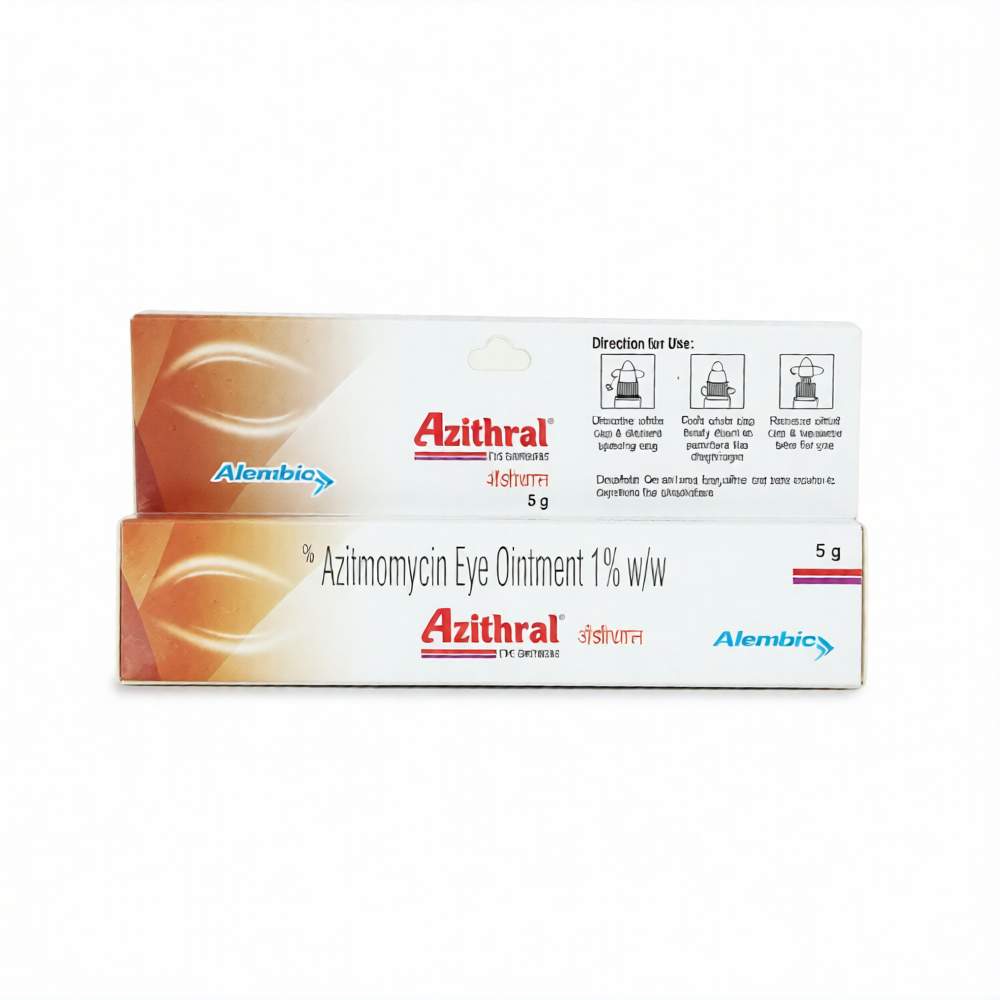
What Is Azithral Eye Ointment?
Azithral Eye Ointment is described as an antibiotic preparation for bacterial eye infections. Azithromycin-based ophthalmic medicines are used against certain susceptible bacteria that cause infections of the eye.
They may be prescribed for conditions such as bacterial conjunctivitis, depending on the exact formulation and its approved indications.
How Does Azithral Work?
Azithromycin belongs to the macrolide class of antibiotics. It works by binding to the 50S ribosomal subunit of susceptible bacteria and inhibiting bacterial protein synthesis.
This prevents bacterial growth and helps the body clear the infection.
How to Use Azithral Eye Ointment
- Use only as directed by an ophthalmologist.
- Wash your hands thoroughly before application.
- If the product is confirmed to be an eye ointment, gently pull down the lower eyelid and apply the prescribed amount inside the lower eyelid.
- Avoid touching the tube tip to the eye, eyelids, or fingers.
- Close your eye gently after application.
- Follow the prescribed treatment duration.
- Avoid wearing contact lenses during an active eye infection unless your ophthalmologist advises otherwise.
Do not use an ordinary skin ointment inside the eye. Only products specifically labeled for ophthalmic use are suitable for application to the eye.
Common Side Effects
Depending on the formulation, possible side effects include:
- Temporary blurred vision
- Mild burning or stinging
- Eye irritation
- Redness
- Watery eyes
- Temporary discomfort after application
Serious Side Effects
Seek medical attention if you experience:
- Severe eye pain
- Significant swelling around the eyes
- Sudden changes in vision
- Severe allergic reactions
- Persistent or worsening eye irritation
- Symptoms that worsen despite treatment
Contraindications & Precautions
Inform your healthcare professional if you:
- Are allergic to azithromycin, erythromycin, or other macrolide antibiotics.
- Have experienced previous allergic reactions to ophthalmic medicines.
- Have a viral or fungal eye infection.
- Are pregnant or breastfeeding.
- Use other prescription eye medicines.
Azithromycin does not treat viral or fungal infections. Unnecessary antibiotic use can contribute to antibiotic resistance.
Advantages
- Targets susceptible bacteria responsible for certain eye infections.
- Provides localized treatment when supplied in an ophthalmic formulation.
- Belongs to the established macrolide antibiotic class.
- May help reduce infection-related symptoms when the bacteria are susceptible.
Disadvantages / Limitations
- Does not treat viral or fungal eye infections.
- May cause temporary blurred vision or irritation.
- Requires accurate diagnosis and appropriate prescribing.
- Allergic reactions are possible.
- Unnecessary or inappropriate antibiotic use can contribute to resistance.
Important Notes
Azithral Eye Ointment should be used only after confirming the product’s exact composition and ophthalmic labeling. Eye infections can have bacterial, viral, allergic, or other causes, and treatment differs according to the diagnosis.
Do not continue using the medicine beyond the prescribed duration without medical advice.
Frequently Asked Questions
What is Azithral Eye Ointment used for?
An azithromycin ophthalmic product may be used to treat susceptible bacterial eye infections, depending on its approved indication.
Is Azithral Eye Ointment an antibiotic?
If it contains azithromycin, yes. Azithromycin is a macrolide antibiotic.
Can Azithral treat viral conjunctivitis?
No. Azithromycin is an antibiotic and does not treat viral conjunctivitis.
Can I use Azithral Eye Ointment every day?
Use it only for the frequency and duration prescribed by your ophthalmologist.
Can Azithral Eye Ointment cause blurred vision?
Ophthalmic ointments may temporarily blur vision after application.
Is Azithral a steroid?
No. Azithromycin is an antibiotic, not a corticosteroid.




















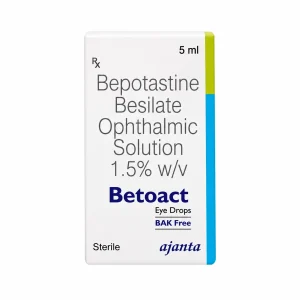 Price range: $11.00 through $48.00 Choose Pack This product has multiple variants. The options may be chosen on the product page
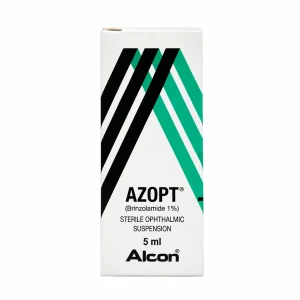 Price range: $32.00 through $118.00 Choose Pack This product has multiple variants. The options may be chosen on the product page
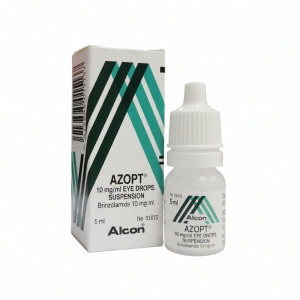 Price range: $19.95 through $90.26 Choose Pack This product has multiple variants. The options may be chosen on the product page
 Price range: $41.40 through $122.22 Choose Pack This product has multiple variants. The options may be chosen on the product page
Reviews
There are no reviews yet.