


















































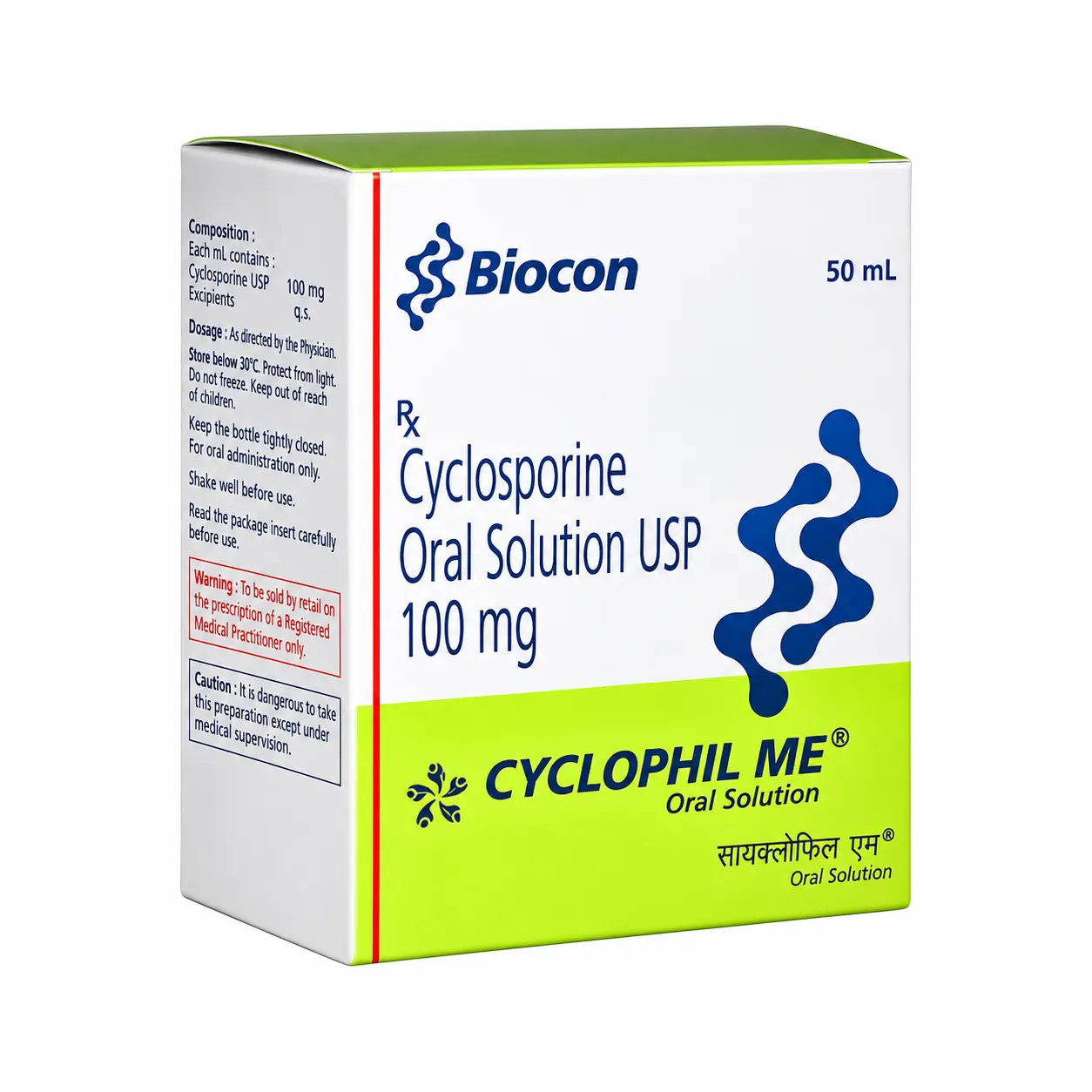
Cyclophil Me 100 Mg (Cyclosporine)
Want to order in bulk / B2B price?
Every order ships with a tracking number. Standard delivery takes 12–15 days.
If your parcel doesn't arrive, choose a new package or a full refund.
Call +1 251-332-4105 or email [email protected].
Share
What Is Cyclophil ME 100 mg?
Cyclophil ME 100 mg contains Cyclosporine 100 mg, an immunosuppressant medicine used to reduce the activity of the immune system.
It is primarily prescribed to help prevent organ rejection following kidney, liver, and heart transplantation. It may also be used for certain autoimmune and inflammatory conditions when prescribed by a specialist.
After an organ transplant, the body’s immune system may recognize the transplanted organ as foreign and attempt to attack it. Cyclosporine helps suppress this immune response, reducing the risk of transplant rejection.
Cyclophil ME uses a modified microemulsion formulation designed to improve the consistency of cyclosporine absorption compared with older, non-modified formulations.
Because cyclosporine affects immune function and can cause serious adverse effects, treatment requires regular medical monitoring.
How Does Cyclophil ME 100 mg Work?
Cyclophil ME contains Cyclosporine, a calcineurin inhibitor.
Cyclosporine binds to a protein called cyclophilin inside immune cells. This complex inhibits the enzyme calcineurin, reducing the activation of T lymphocytes.
As a result, the production of certain immune-signaling molecules, particularly interleukin-2 (IL-2), is reduced.
This helps:
- Suppress excessive immune-system activity.
- Reduce T-cell activation.
- Prevent immune-mediated damage to transplanted organs.
- Control inflammation in certain autoimmune conditions.
- Reduce the risk of organ transplant rejection.
Cyclosporine suppresses immune activity but does not permanently cure autoimmune diseases.
Uses of Cyclophil ME 100 mg
Cyclophil ME may be prescribed for the following conditions, depending on the applicable product approval and specialist assessment.
1. Organ Transplant Rejection Prevention
Used as part of immunosuppressive treatment following:
- Kidney transplantation
- Liver transplantation
- Heart transplantation
It is often prescribed alongside other immunosuppressant medicines.
2. Rheumatoid Arthritis
May be used in selected patients with severe, active rheumatoid arthritis when other treatments have not provided adequate control.
3. Severe Psoriasis
May be prescribed for severe, difficult-to-treat psoriasis when systemic treatment is appropriate.
4. Other Immune-Mediated Conditions
Specialists may prescribe cyclosporine for selected conditions such as:
- Nephrotic syndrome
- Certain severe inflammatory skin disorders
- Selected autoimmune diseases
These uses depend on the specific formulation, local approvals, and clinical circumstances.
How to Take Cyclophil ME 100 mg
- Take Cyclophil ME exactly as prescribed by your healthcare professional.
- Swallow the capsule whole with water.
- Take the medicine consistently at the same times each day.
- Maintain a consistent relationship to meals.
- Do not crush, chew, or open the capsule unless specifically instructed.
- Avoid grapefruit and grapefruit juice during treatment.
- Do not change the brand or formulation without medical supervision.
- Attend scheduled blood tests and follow-up appointments.
- Never stop treatment abruptly without consulting your specialist.
Dosage Information: Cyclosporine dosing is individualized according to the medical condition, body weight, kidney function, blood concentrations, and response to treatment.
The 100 mg capsule strength does not represent a universal recommended dose.
Important: Modified and non-modified cyclosporine formulations are not automatically interchangeable. Switching formulations can alter drug exposure and may require dose adjustment and blood-level monitoring.
Common Side Effects
Possible side effects include:
- High blood pressure
- Headache
- Nausea
- Vomiting
- Abdominal discomfort
- Diarrhea
- Tremors
- Increased hair growth
- Gum enlargement
- Fatigue
- Increased blood lipid levels
- Elevated potassium levels
- Changes in kidney function
Some side effects are dose-related and may improve after medically supervised dose adjustments.
Serious Side Effects
Seek immediate medical attention if you experience:
- Significant reduction in urination
- Severe or persistent headache
- Seizures
- Confusion or changes in mental status
- Severe high blood pressure
- Unusual bleeding or bruising
- Persistent fever or signs of infection
- Severe abdominal pain
- Yellowing of the skin or eyes
- Severe allergic reactions
- Unexplained lumps or swollen lymph nodes
Important: Cyclosporine can cause serious kidney toxicity, high blood pressure, infections, and an increased risk of certain cancers, including lymphoma and skin cancer.
Regular monitoring is essential throughout treatment.
Contraindications & Precautions
Before taking Cyclophil ME 100 mg, inform your healthcare professional if you:
- Are allergic to cyclosporine or any formulation ingredient.
- Have kidney disease or impaired kidney function.
- Have uncontrolled high blood pressure.
- Have liver disease.
- Have an active infection.
- Have a history of cancer.
- Have elevated potassium levels.
- Have abnormal blood lipid levels.
- Are pregnant, planning pregnancy, or breastfeeding.
- Are taking other immunosuppressants.
- Are using medicines that may affect kidney function.
Kidney Function: Cyclosporine can reduce kidney function and may cause kidney damage. Regular monitoring of serum creatinine and other renal parameters is required.
Blood Pressure: Cyclosporine may increase blood pressure. Patients should have their blood pressure monitored regularly.
Infection Risk: Immunosuppressive treatment increases susceptibility to bacterial, viral, fungal, and opportunistic infections.
Cancer Risk: Long-term immunosuppression may increase the risk of lymphoma and skin cancers.
Vaccinations: Live vaccines should generally be avoided during significant immunosuppression unless specifically recommended by the treating specialist.
Drug Interactions: Cyclosporine interacts with numerous medicines, including certain antibiotics, antifungals, anticonvulsants, cholesterol-lowering medicines, and herbal products such as St. John’s wort.
Pregnancy and Breastfeeding: Treatment requires individualized specialist assessment because both the underlying condition and immunosuppressive therapy may affect pregnancy and infant safety.
Advantages
- Helps prevent organ transplant rejection.
- Suppresses excessive immune-system activity.
- Can help manage selected autoimmune conditions.
- Acts by inhibiting calcineurin-mediated T-cell activation.
- Modified microemulsion formulation provides more consistent absorption than older non-modified formulations.
- Available as an oral capsule.
- Can be used as part of combination immunosuppressive therapy.
- May help maintain transplanted organ function when appropriately prescribed.
- Does not contain a corticosteroid.
Disadvantages / Limitations
- May cause kidney toxicity.
- Can increase blood pressure.
- Increases susceptibility to infections.
- Requires regular blood tests.
- May cause tremors, gum enlargement, or increased hair growth.
- Can interact with numerous medicines.
- May increase the risk of certain cancers.
- Requires careful dose individualization.
- Modified and non-modified formulations are not automatically interchangeable.
- Does not permanently cure autoimmune conditions.
- Should not be discontinued without specialist supervision.
Important Notes
Cyclophil ME 100 mg is a potent prescription immunosuppressant medicine.
Patients taking cyclosporine require regular monitoring of:
- Kidney function
- Blood pressure
- Cyclosporine blood concentrations when indicated
- Liver function
- Blood potassium and magnesium
- Blood lipid levels
- Signs of infection or other adverse effects
For transplant recipients, missing doses or stopping treatment may increase the risk of organ rejection.
Avoid grapefruit products because they can increase cyclosporine exposure and potentially raise the risk of toxicity.
Use sun protection and follow recommended skin examinations because immunosuppressive treatment can increase the risk of skin cancer.
Store according to the manufacturer’s instructions and keep the medicine out of reach of children.
Frequently Asked Questions
What is Cyclophil ME 100 mg used for?
Cyclophil ME 100 mg is an immunosuppressant primarily used to prevent organ transplant rejection. It may also be prescribed for selected autoimmune and inflammatory conditions.
What is the active ingredient in Cyclophil ME?
Cyclophil ME contains Cyclosporine, also called Ciclosporin.
How does Cyclophil ME work?
It inhibits calcineurin activity in T lymphocytes, reducing immune-cell activation and suppressing excessive immune responses.
Is Cyclophil ME used after kidney transplantation?
Yes. Cyclosporine is used as part of immunosuppressive treatment to help prevent kidney transplant rejection.
Can Cyclophil ME treat rheumatoid arthritis?
Cyclosporine may be prescribed for selected patients with severe rheumatoid arthritis when other treatments are unsuitable or insufficient.
Can Cyclophil ME be used for psoriasis?
Yes. Cyclosporine may be used for severe psoriasis under specialist supervision.
Does Cyclophil ME affect kidney function?
Yes. Cyclosporine can cause kidney toxicity, making regular kidney-function monitoring essential.
Can Cyclophil ME increase blood pressure?
Yes. High blood pressure is a recognized adverse effect of cyclosporine.
Does Cyclophil ME weaken the immune system?
Yes. It intentionally suppresses immune activity to prevent transplant rejection or control selected immune-mediated conditions.
Can Cyclophil ME increase infection risk?
Yes. Immunosuppressive treatment increases susceptibility to infections.
Can I take Cyclophil ME with grapefruit juice?
No. Grapefruit can increase cyclosporine concentrations and raise the risk of adverse effects.
Can I switch Cyclophil ME with another cyclosporine brand?
Do not switch formulations or brands without specialist guidance. Different cyclosporine formulations may produce different drug exposure.
Is Cyclophil ME a steroid or hormone?
No. Cyclophil ME contains Cyclosporine, a calcineurin-inhibitor immunosuppressant. It is neither a corticosteroid nor a hormone-replacement medicine.
Can I stop Cyclophil ME when I feel better?
No. Stopping treatment without medical supervision may lead to organ rejection or recurrence of the underlying condition.
Does Cyclophil ME require blood tests?
Yes. Regular laboratory monitoring is essential to assess kidney function, medicine exposure, and other potential adverse effects.
| Product Name | Cyclophil ME 100 mg |
|---|---|
| Brand Name | Cyclophil ME |
| Active Ingredient | Cyclosporine (Ciclosporin) |
| Strength | 100 mg |
| Dosage Form | Oral Capsule |
| Route of Administration | Oral |
| Manufacturer | Biocon Ltd. (verify packaging) |
| Therapeutic Class | Immunosuppressant / Calcineurin Inhibitor |
| Category | Immunosuppressants / Organ Transplant Medicines |
| Prescription Status | Prescription medicine |
| Formulation | Modified Cyclosporine / Microemulsion |
| Pack sizes | 30 capsules, 60 capsules, 90 capsules |
Related products
-
 $17.05 – $73.33Price range: $17.05 through $73.33 Choose Pack This product has multiple variants. The options may be chosen on the product page
-
 $18.52 – $54.42Price range: $18.52 through $54.42 Choose Pack This product has multiple variants. The options may be chosen on the product page
-
 Rated 4.50 out of 5$10.00 – $40.00Price range: $10.00 through $40.00 Choose Pack This product has multiple variants. The options may be chosen on the product page
-
 Rated 4.63 out of 5$84.00 – $312.00Price range: $84.00 through $312.00 Choose Pack This product has multiple variants. The options may be chosen on the product page
Reviews
There are no reviews yet.