
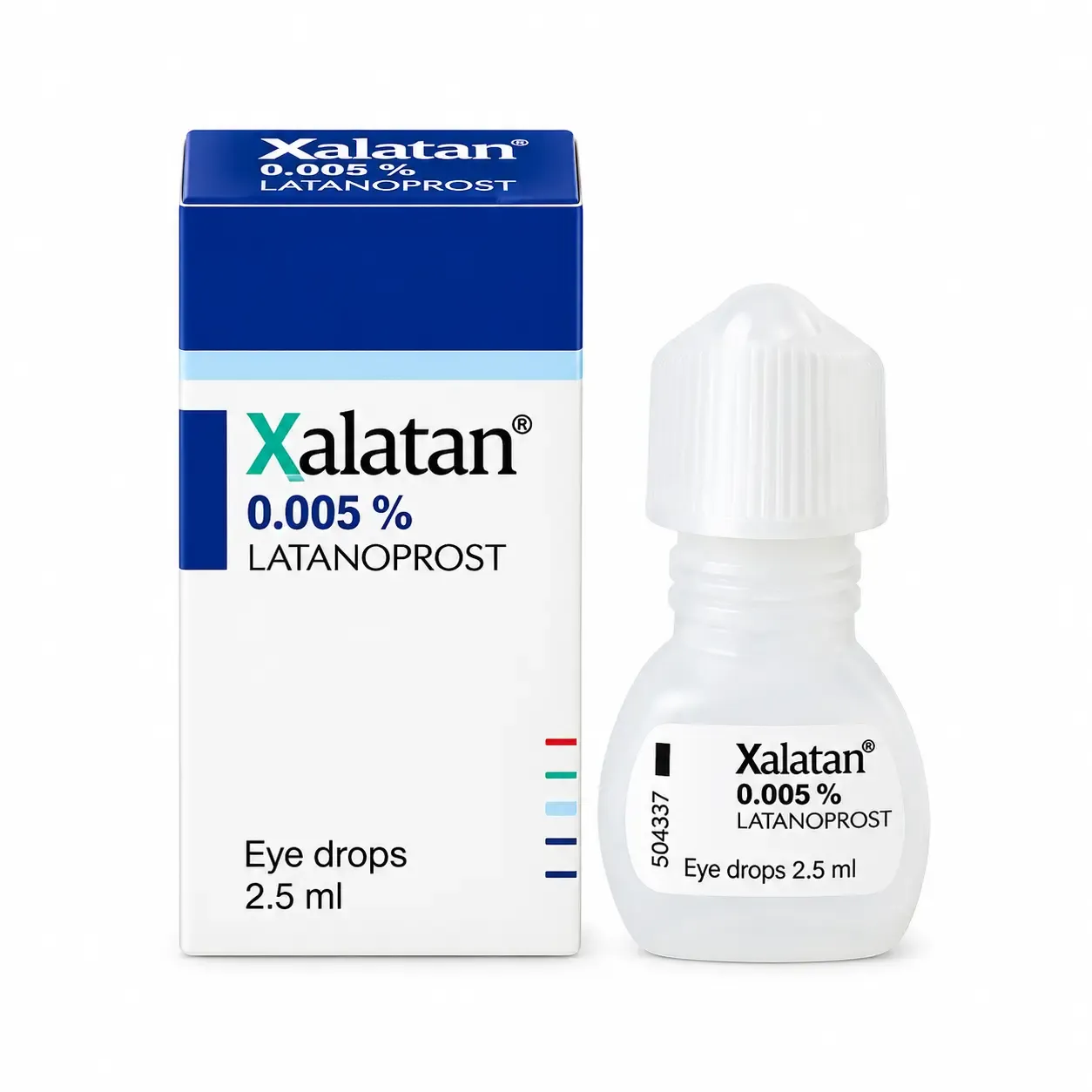
Xalatan Eye Drops
Want to order in bulk / B2B price?
Every order ships with a tracking number. Standard delivery takes 12–15 days.
If your parcel doesn't arrive, choose a new package or a full refund.
Call +1 251-332-4105 or email [email protected].
Share
What Is Xalatan Eye Drops?
Xalatan Eye Drops is a prescription ophthalmic medication containing Latanoprost 0.005% w/v. Latanoprost belongs to a class of medications known as prostaglandin analogues and is primarily used to reduce elevated intraocular pressure (IOP) in patients with open-angle glaucoma and ocular hypertension.
Glaucoma is a progressive eye condition that can damage the optic nerve and potentially cause permanent vision loss. Elevated intraocular pressure is an important risk factor associated with glaucoma progression.
Xalatan works by increasing the drainage of aqueous humor, the natural fluid produced inside the eye. Improved fluid drainage helps reduce intraocular pressure and supports long-term glaucoma management.
Regular administration and periodic ophthalmological examinations are essential for maintaining appropriate eye pressure and reducing the risk of progressive optic nerve damage.
How Does Xalatan Eye Drops Work?
1. Ophthalmic Administration
Latanoprost is administered directly into the affected eye, allowing the medication to act on ocular tissues.
2. Conversion Into Active Form
Latanoprost is a prodrug that undergoes hydrolysis after passing through the cornea, producing its pharmacologically active free acid.
3. Prostaglandin Receptor Activation
The active form stimulates prostaglandin FP receptors within ocular tissues.
4. Increased Aqueous Humor Drainage
Latanoprost primarily increases aqueous humor drainage through the uveoscleral outflow pathway.
5. Reduction of Intraocular Pressure
Improved fluid drainage reduces pressure within the eye.
6. Long-Term Optic Nerve Protection
Maintaining appropriate intraocular pressure may help reduce the risk of progressive optic nerve damage and glaucoma-related vision loss.
Important: Xalatan does not reverse existing optic nerve damage or restore vision already lost due to glaucoma.
Uses of Xalatan Eye Drops
1. Open-Angle Glaucoma
Xalatan is used to reduce elevated intraocular pressure in patients with open-angle glaucoma, a common form of glaucoma associated with progressive optic nerve damage.
2. Ocular Hypertension
Ocular hypertension occurs when pressure inside the eye is higher than normal without detectable glaucomatous optic nerve damage. Latanoprost helps reduce intraocular pressure in patients requiring treatment.
3. Long-Term Intraocular Pressure Management
Xalatan may be prescribed as part of a long-term treatment plan to maintain intraocular pressure within an individualized target range.
4. Reduction of Glaucoma Progression Risk
Appropriate intraocular pressure management may help slow glaucoma progression and reduce the risk of further vision loss.
5. Combination Glaucoma Treatment
Ophthalmologists may prescribe Xalatan alongside other classes of pressure-lowering medications when additional intraocular pressure reduction is required.
6. Alternative Anti-Glaucoma Treatment
Latanoprost may be considered when other glaucoma medications are unsuitable, insufficiently effective, or poorly tolerated.
Important: Xalatan is not intended to treat bacterial eye infections, cataracts, dry eyes, allergic conjunctivitis, or general eye irritation.
Benefits of Xalatan Eye Drops
1. Effective Intraocular Pressure Reduction
Latanoprost is an established pharmaceutical ingredient used to reduce elevated intraocular pressure.
2. Improved Aqueous Humor Drainage
The medication promotes the natural drainage of fluid from the eye.
3. Long-Term Glaucoma Management
Regular prescribed administration supports ongoing management of open-angle glaucoma and ocular hypertension.
4. Once-Daily Administration
Xalatan is generally prescribed once daily, providing a convenient treatment schedule.
5. Sustained Pressure-Lowering Activity
Latanoprost provides intraocular pressure reduction for at least 24 hours following appropriate administration.
6. Reduction of Further Vision Loss Risk
Effective intraocular pressure management may help reduce the risk of progressive glaucoma-related vision loss.
7. Non-Beta-Blocker Formulation
Xalatan contains latanoprost rather than timolol or another beta-blocker as its active pharmaceutical ingredient.
8. Established Ophthalmic Medication
Latanoprost has an established history of clinical use in the management of glaucoma and elevated intraocular pressure.
Xalatan Eye Drops Dosage and Administration
The appropriate treatment regimen should be determined by an ophthalmologist based on intraocular pressure, glaucoma severity, treatment response, age, and existing medical conditions.
Recommended Reference Dosage
The standard recommended dosage of Latanoprost 0.005% ophthalmic solution is one drop in the affected eye or eyes once daily, generally in the evening.
Xalatan should not be administered more than once daily. More frequent administration may reduce its effectiveness or paradoxically increase intraocular pressure.
How to Use Xalatan Eye Drops
- Wash your hands thoroughly before administration.
- Remove contact lenses, if applicable.
- Tilt your head backward and gently pull down the lower eyelid.
- Hold the dropper above the eye without touching the eye or surrounding skin.
- Instill one prescribed drop into the lower conjunctival sac.
- Gently close the eye without excessive blinking.
- Apply gentle pressure to the inner corner of the eye near the nose for approximately one minute.
- Wipe away excess solution from the surrounding skin.
- Replace the bottle cap immediately after administration.
Avoid touching the dropper tip to any surface because contamination may increase the risk of eye infections.
Can Xalatan Be Used With Other Eye Drops?
Xalatan may be prescribed alongside other ophthalmic medications. Allow at least five minutes between different eye drops unless otherwise instructed by an ophthalmologist.
Can Xalatan Be Used With Contact Lenses?
Remove contact lenses before administering Xalatan. Wait at least 15 minutes before reinserting them, according to the standard product instructions.
Certain Xalatan formulations contain benzalkonium chloride, a preservative that may be absorbed by soft contact lenses.
What If a Dose Is Missed?
If a dose is missed, continue with the next scheduled dose.
Do not administer additional drops to compensate for a missed dose.
What Happens in Case of Overdose?
Excessive ophthalmic administration may cause eye redness, irritation, and discomfort.
If accidental ingestion or excessive exposure occurs, contact a healthcare professional or poison control service for appropriate guidance.
How Long Does Xalatan Take to Work?
Latanoprost generally begins reducing intraocular pressure approximately three to four hours after administration.
The maximum pressure-lowering effect is generally reached within approximately eight to twelve hours, with activity lasting at least 24 hours.
Individual treatment response may vary depending on baseline intraocular pressure, glaucoma severity, and other medications.
Regular ophthalmological examinations are necessary to evaluate treatment effectiveness.
Common Side Effects
Possible side effects associated with Xalatan Eye Drops include:
- Eye redness
- Eye irritation
- Eye itching
- Burning sensation
- Stinging sensation
- Foreign body sensation
- Temporary blurred vision
- Increased tear production
- Dry eyes
- Eye discomfort
- Eyelash growth
- Increased eyelash thickness
- Eyelid skin darkening
- Increased iris pigmentation
- Increased sensitivity to light
- Headache
Not every patient experiences these side effects. Persistent or severe symptoms should be discussed with an ophthalmologist.
Potentially Harmful Effects & Serious Health Risks
1. Permanent Iris Pigmentation Changes
Latanoprost may gradually increase brown pigmentation within the iris. This change may be permanent and can become more noticeable when only one eye is treated.
2. Eyelash and Eyelid Changes
Long-term administration may increase eyelash length, thickness, number, and pigmentation. Changes in eyelid skin color may also occur.
3. Intraocular Inflammation
Latanoprost may worsen existing ocular inflammation, including iritis or uveitis, in susceptible patients.
4. Macular Edema
Macular edema, including cystoid macular edema, has been reported with prostaglandin analogues. Patients with certain retinal conditions or previous cataract surgery may have an increased risk.
5. Herpetic Keratitis
Latanoprost may reactivate herpes simplex keratitis in susceptible individuals. Patients with a history of herpetic eye infections should inform their ophthalmologist.
6. Prostaglandin-Associated Periorbitopathy
Long-term use may cause changes in tissues surrounding the eye, including deepening of the upper eyelid sulcus and reduction of periorbital fat.
7. Eye Infection Due to Contamination
Contamination of the dropper tip may introduce microorganisms and increase the risk of serious eye infections.
8. Severe Allergic Reactions
Rare allergic reactions may include significant eye swelling, facial swelling, skin rash, and breathing difficulties.
Emergency Warning: Seek immediate medical attention for sudden vision loss, severe eye pain, significant eye swelling, sudden visual disturbances, or breathing difficulties.
Contraindications & Safety Precautions
1. Latanoprost Allergy
Xalatan should not be used by individuals with known hypersensitivity to latanoprost or other formulation ingredients.
2. Existing Eye Inflammation
Patients with active uveitis, iritis, or other inflammatory eye conditions require appropriate ophthalmological assessment before treatment.
3. Previous Eye Surgery
Patients who have undergone cataract surgery or other ophthalmic procedures should inform their ophthalmologist before using Xalatan.
4. Macular Edema Risk
Individuals with aphakia, certain types of pseudophakia, retinal disorders, or other risk factors for macular edema require careful medical assessment.
5. Herpes Simplex Keratitis
Patients with a history of herpetic keratitis should use latanoprost cautiously under specialist supervision. Its use should generally be avoided during active herpes simplex keratitis.
6. Pregnancy
Pregnant women or women planning pregnancy should consult a healthcare professional before using latanoprost because of potential reproductive risks.
7. Breastfeeding
Breastfeeding women should discuss the potential benefits and risks of latanoprost treatment with their healthcare professional.
8. Contact Lens Use
Contact lenses should be removed before administration and reinserted after the recommended waiting period.
9. Driving and Operating Machinery
Xalatan may temporarily cause blurred vision. Avoid driving or operating machinery until normal vision returns.
10. Pediatric Use
Approved pediatric indications and age ranges vary by country. Treatment in children requires specialist assessment.
11. Respiratory Conditions
Patients with asthma or a history of respiratory complications should inform their healthcare professional. Asthma exacerbation and breathing difficulties have been reported with latanoprost.
12. Regular Eye Examinations
Patients should undergo periodic intraocular pressure measurements, optic nerve examinations, and visual field assessments as recommended by their ophthalmologist.
Drug Interactions
Other Prostaglandin Analogue Eye Drops
Concurrent use with travoprost, bimatoprost, tafluprost, or other prostaglandin analogues is generally not recommended because it may paradoxically increase intraocular pressure.
Beta-Blocker Eye Drops
Timolol may be prescribed alongside latanoprost when additional intraocular pressure reduction is required.
Carbonic Anhydrase Inhibitors
Dorzolamide and brinzolamide may be used in combination glaucoma treatment under ophthalmological supervision.
Alpha-Adrenergic Agonists
Brimonidine may be prescribed alongside latanoprost when clinically appropriate.
Thiomersal-Containing Eye Drops
Precipitation may occur when Xalatan is mixed with ophthalmic preparations containing thiomersal. Allow at least five minutes between administrations.
Other Ophthalmic Medications
Allow at least five minutes between different ophthalmic preparations to reduce the possibility of one medication washing out another.
Inform your ophthalmologist about all prescription medicines, over-the-counter eye drops, and existing ophthalmic treatments.
Advantages / Pharmaceutical Characteristics
- Latanoprost 0.005% ophthalmic formulation
- Prostaglandin analogue medication
- Intraocular pressure reduction
- Aqueous humor drainage support
- Once-daily administration
- Sustained 24-hour pressure-lowering activity
- Open-angle glaucoma management
- Ocular hypertension management
- Non-beta-blocker formulation
- Long-term ophthalmic treatment
- Established active pharmaceutical ingredient
- 2.5 ml ophthalmic bottle
Disadvantages / Limitations
- Prescription required
- Requires consistent administration
- Eye redness and irritation
- Temporary blurred vision
- Potential permanent iris pigmentation changes
- Eyelash and eyelid changes
- Possible periorbital tissue changes
- Risk of intraocular inflammation
- Potential macular edema
- Possible reactivation of herpetic keratitis
- Refrigerated storage before opening, depending on labeling
- Requires regular ophthalmological monitoring
- Does not permanently cure glaucoma
- Does not restore previously lost vision
Xalatan vs Travatan Eye Drops
Xalatan contains Latanoprost 0.005%, whereas Travatan contains Travoprost 0.004%.
Both medications belong to the prostaglandin analogue drug class and are used to reduce elevated intraocular pressure by increasing aqueous humor drainage.
Both are generally administered once daily. Treatment effectiveness, tolerability, preservative composition, storage requirements, and individual response may differ.
The appropriate medication should be selected by an ophthalmologist.
Xalatan vs Bimatoprost Eye Drops
Xalatan contains latanoprost, while bimatoprost eye drops contain bimatoprost as their active pharmaceutical ingredient.
Both medications are used for glaucoma and ocular hypertension management and promote aqueous humor drainage.
Both may cause changes in eyelash growth, iris pigmentation, and surrounding eyelid tissues.
These medications should not be combined or substituted without ophthalmological guidance.
Xalatan vs Xalacom Eye Drops
Xalatan contains Latanoprost 0.005% as a single active pharmaceutical ingredient.
Xalacom generally contains a combination of Latanoprost 0.005% and Timolol 0.5%.
Latanoprost increases aqueous humor drainage, while timolol reduces aqueous humor production.
Xalacom may be prescribed when additional intraocular pressure reduction is required. It carries additional beta-blocker-related precautions, including potential respiratory and cardiovascular complications.
Xalatan vs Travacom Eye Drops
Xalatan contains latanoprost alone, whereas Travacom generally contains travoprost and timolol.
Both medications are used for elevated intraocular pressure management but differ in active ingredients, mechanisms of action, and safety precautions.
These medications are not interchangeable without professional medical assessment.
Storage Instructions
Unopened Xalatan bottles are generally stored under refrigeration between 2°C and 8°C and protected from light.
Under standard United States labeling, an opened bottle may be stored at temperatures up to 25°C for a maximum of six weeks. Other markets may specify a shorter after-opening period, such as four weeks.
Always follow the exact storage and after-opening expiry instructions printed on the original product packaging.
Keep the bottle tightly closed when not in use. Avoid excessive heat, direct sunlight, and contamination.
Do not touch the dropper tip or share the bottle with another person.
Keep out of reach of children and pets.
Frequently Asked Questions
1. What is Xalatan Eye Drops used for?
Xalatan is used to reduce elevated intraocular pressure in patients with open-angle glaucoma and ocular hypertension.
2. What is the active ingredient in Xalatan?
Xalatan contains Latanoprost 0.005% w/v, equivalent to 50 micrograms per milliliter.
3. How does Xalatan work?
Latanoprost increases aqueous humor drainage from the eye, helping reduce intraocular pressure.
4. How long does Xalatan take to work?
Latanoprost generally begins reducing intraocular pressure within approximately three to four hours.
5. How long does Xalatan last?
Latanoprost generally provides pressure-lowering activity for at least 24 hours.
6. Why is Xalatan used at night?
Once-daily evening administration is the standard recommended schedule for achieving appropriate intraocular pressure reduction.
7. Can Xalatan be used twice daily?
No. More frequent administration may reduce its effectiveness or paradoxically increase intraocular pressure.
| Product Details | Information |
|---|---|
| Product Name | Xalatan Eye Drops |
| Brand Name | Xalatan |
| Generic Name | Latanoprost |
| Active Ingredient | Latanoprost 0.005% w/v |
| Strength | 50 mcg/ml |
| Pack Size | 2.5 ml |
| Dosage Form | Ophthalmic Solution |
| Manufacturer / Marketer | Pfizer / market-specific authorization holder |
| Drug Class | Prostaglandin Analogue |
| Therapeutic Category | Eye Care / Anti-Glaucoma Medicine |
| Primary Uses | Open-Angle Glaucoma and Ocular Hypertension |
| Mechanism of Action | Increases aqueous humor drainage to reduce intraocular pressure |
| Administration Route | Ophthalmic |
| Onset of Action | Approximately 3–4 hours |
| Maximum Effect | Approximately 8–12 hours |
| Duration of Action | At least 24 hours |
| Recommended Frequency | Once daily, generally in the evening |
| Prescription Status | Prescription Required |
| Dosage | As prescribed by an ophthalmologist |
| Common Side Effects | Eye irritation, redness, itching, and blurred vision |
| Major Safety Risks | Iris pigmentation changes, macular edema, and intraocular inflammation |
| Storage | Refrigeration before opening, subject to market-specific labeling |
| Pack sizes | 1 eye drop, 3 eye drops, 6 eye drops |
Related products
-
 $35.00 – $101.00Price range: $35.00 through $101.00 Choose Pack This product has multiple variants. The options may be chosen on the product page
-
 $21.00 – $56.00Price range: $21.00 through $56.00 Choose Pack This product has multiple variants. The options may be chosen on the product page
-
 $17.05 – $73.33Price range: $17.05 through $73.33 Choose Pack This product has multiple variants. The options may be chosen on the product page
-
 $15.00 – $42.00Price range: $15.00 through $42.00 Choose Pack This product has multiple variants. The options may be chosen on the product page
Reviews
There are no reviews yet.