
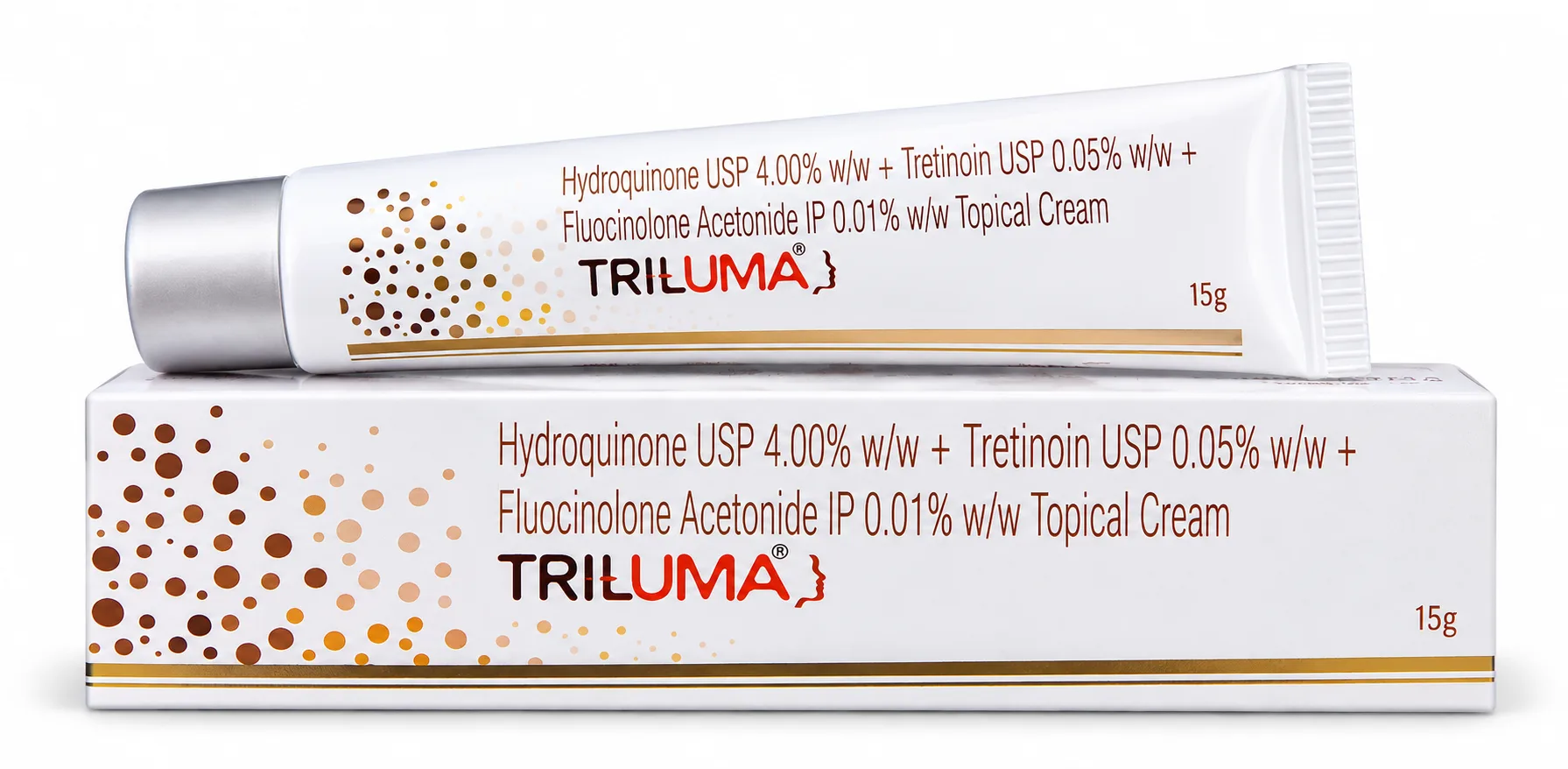



Tri-Luma is a prescription skin cream commonly used for the short-term treatment of moderate-to-severe facial melasma. It combines three active ingredients: fluocinolone acetonide, hydroquinone, and tretinoin.
Product Information
| Product Name | Tri-Luma Cream |
|---|---|
| Active Ingredients | Fluocinolone Acetonide + Hydroquinone + Tretinoin |
| Strength | 0.01% / 4% / 0.05% |
| Dosage Form | Topical Cream |
| Route of Administration | Topical |
| Therapeutic Class | Corticosteroid + Depigmenting Agent + Retinoid |
| Category | Dermatology / Melasma Treatment |
| Prescription Status | Prescription medicine |
| Packaging | Confirm the pack size from the specific product label |
The standard Tri-Luma formulation contains fluocinolone acetonide 0.01%, hydroquinone 4%, and tretinoin 0.05%.
What Is Tri-Luma Cream?
Tri-Luma Cream is a combination medicine used for the short-term treatment of moderate-to-severe melasma on the face. Melasma causes brown or gray-brown patches of pigmentation, often on the cheeks, forehead, and upper lip.
How Does Tri-Luma Work?
The three ingredients work together:
- Fluocinolone acetonide: A corticosteroid that helps reduce inflammation and irritation.
- Hydroquinone: Reduces melanin production, helping lighten areas of excess pigmentation.
- Tretinoin: A retinoid that promotes skin-cell turnover and helps improve the penetration of hydroquinone.
The combination helps reduce the appearance of melasma, although pigmentation may return after treatment stops.
How to Use Tri-Luma Cream
- Use only under a dermatologist’s supervision.
- Apply a thin layer to the affected facial areas as prescribed.
- The official product instructions specify application once daily, at least 30 minutes before bedtime.
- Avoid contact with the eyes, lips, and mucous membranes.
- Use broad-spectrum sunscreen with SPF 30 or higher and protective clothing during the day.
- Stop treatment as directed by your dermatologist; it is not intended for continuous maintenance treatment.
DailyMed+1
Common Side Effects
Possible side effects include:
- Redness
- Skin peeling
- Dryness
- Burning or stinging
- Itching
- Skin irritation
Serious Side Effects
Seek medical advice if you experience:
- Severe or persistent skin inflammation
- Significant allergic reactions
- Unusual blue-black darkening of the skin
- Skin thinning or other changes associated with corticosteroid exposure
- Symptoms suggesting an allergic reaction to sulfites
Hydroquinone can cause a condition called exogenous ochronosis, which produces blue-black skin discoloration.
Contraindications & Precautions
Consult your dermatologist before using Tri-Luma if you:
- Are pregnant, planning pregnancy, or breastfeeding
- Have a known allergy to any ingredient
- Have sensitive, damaged, or severely irritated skin
- Use other prescription skin treatments or exfoliating products
- Have previously experienced reactions to hydroquinone or topical corticosteroids
Do not use Tri-Luma as a general skin-whitening cream or for prolonged self-directed use. Its corticosteroid component can cause adverse skin effects when misused.
Advantages
- Combines three complementary active ingredients
- Helps reduce facial melasma and uneven pigmentation
- May improve the appearance of dark patches with appropriate use
- Provides a targeted, prescription-based treatment option
Disadvantages / Limitations
- May cause dryness, peeling, redness, and irritation
- Requires sun protection throughout treatment
- Is intended for short-term use rather than maintenance
- Melasma can recur after treatment ends
- Prolonged or inappropriate use can cause skin complications
Important Notes
Tri-Luma Cream should be used according to a dermatologist’s instructions. The official U.S. product information specifies short-term treatment, up to eight weeks, for moderate-to-severe facial melasma. The appropriate treatment duration may differ for other products or markets.
Frequently Asked Questions
What is Tri-Luma Cream used for?
It is used for the short-term treatment of moderate-to-severe facial melasma.
Does Tri-Luma contain a steroid?
Yes. It contains fluocinolone acetonide, a topical corticosteroid, alongside hydroquinone and tretinoin.
Can Tri-Luma be used daily?
The standard product instructions specify once-daily evening application during the prescribed treatment period. Follow your dermatologist’s directions.
Can Tri-Luma be used for a long time?
It is not intended for continuous maintenance treatment. Prolonged use may increase the risk of adverse effects.
Is sunscreen necessary while using Tri-Luma?
Yes. Sun avoidance and sunscreen are important because sunlight can worsen melasma and undermine treatment results.



Reviews
There are no reviews yet.